Sunk Cost Fallacy: Why Past Investments Keep Us in Bad Decisions
Money, time, effort, and reputation already spent cannot be recovered. Yet those past investments often make us more likely to continue a failing project.
Research note: The sunk-cost effect is well documented, but its strength varies by type of investment, framing, personal responsibility, and decision context.
A sunk cost should be irrelevant to the next choice
A sunk cost is a resource that has already been spent and cannot be recovered. Rationally, the next decision should depend on future costs, future benefits, and available alternatives. Psychologically, however, past investment changes how quitting feels.
The classic evidence
Arkes and Blumer’s classic experiments showed that people were more likely to continue an endeavor after investing money, time, or effort. In a field study involving theater subscriptions, people who paid more attended more performances for a period of time even though the ticket price was already unrecoverable.
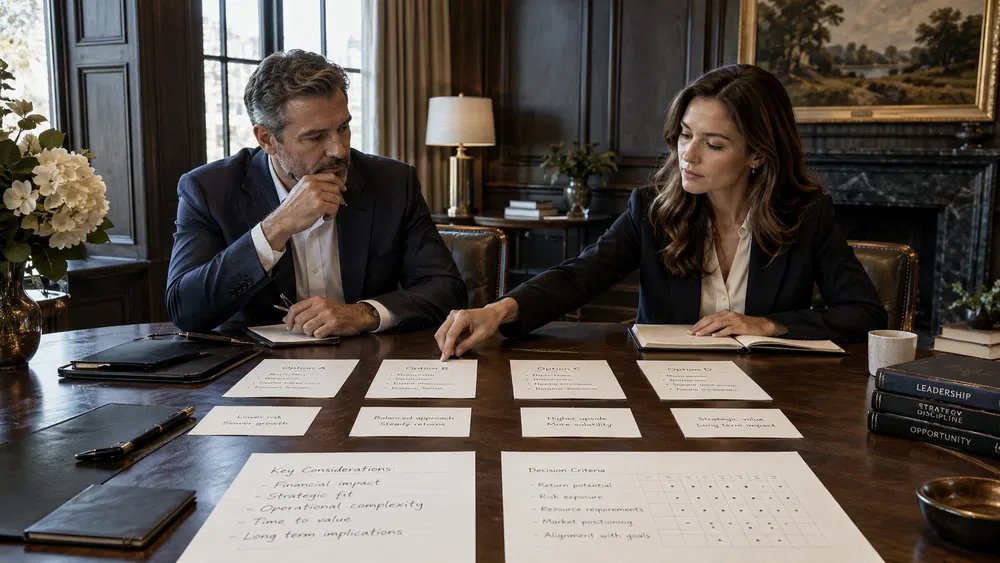
Why quitting feels like making the loss real
Several mechanisms can contribute. People dislike appearing wasteful, want to justify earlier decisions, anticipate regret, feel responsible for the project, or frame abandonment as admitting failure. Continuing creates the possibility—sometimes only emotionally—that the original investment may still be vindicated.
Sunk cost and escalation of commitment
In organizations, sunk costs can combine with reputation and hierarchy. A leader who championed a project may face greater psychological and political cost when recommending cancellation. Teams may keep investing because stopping would force them to explain why the earlier investment failed.

- Separate the original decision from the continuation decision.
- Ask what you would do if you inherited the project today.
- Set exit criteria before the investment begins.
- Use independent reviewers who are not defending the original choice.
Time can be a sunk cost too
People often say, “I have already spent three years on this,” as if the three years can be recovered by spending a fourth. Research on time-based sunk costs is mixed and context-sensitive, but modern replication work finds that unrecoverable time can influence decisions under some conditions.
The practical question is not whether the past mattered. It did. The question is whether the past changes the expected return from the next unit of time.
The strategic advantage of quitting well
Strong decision makers are not people who never abandon projects. They are people who can distinguish persistence from attachment. Persistence is rational when future evidence still supports the goal. Attachment is when the project survives because the past investment has become part of identity.
Ending a project can preserve capital, attention, and opportunity. In that sense, quitting at the right time is not the opposite of discipline; it is disciplined reallocation.
Why organizations are especially vulnerable
Organizations add social forces to the basic sunk-cost problem. Projects have champions, budgets, teams, public promises, and career reputations attached to them. Canceling a project can threaten status even when continuation destroys more value. The person making the recommendation may also be the person who approved the original investment.
This creates escalation of commitment: additional resources are spent partly to defend the meaning of earlier resources.
Precommitment reduces the temptation to rewrite the rules
One of the best defenses is to establish stopping criteria before uncertainty resolves. A company might define the customer adoption, cost, technical milestone, or evidence threshold required for the next investment stage. When the review arrives, the team compares results with the prior rule instead of inventing a new justification.
Precommitment is useful because people are excellent at creating reasons after becoming emotionally invested.
Ask the inheritance question
A powerful reframing is: if this project were handed to me today with no personal history attached, would I invest the next dollar or hour? This removes the emotional need to rescue the original decision and directs attention to future value.
The question does not force quitting. It forces the continuation case to stand on its own.
Sunk costs are often disguised as loyalty
People rarely say, “I am continuing because of a sunk cost.” They say, “We cannot waste what we have built,” “We owe it one more quarter,” or “We have come too far to stop.” Those statements can contain legitimate strategic reasons, but they can also hide the assumption that past spending must somehow be recovered by future spending.
The diagnostic test is to remove the history. If the continuation decision still looks attractive on future costs and benefits, persistence may be rational. If the only strong argument is what has already been spent, the sunk cost is driving the case.
Opportunity cost is the missing variable
Every additional dollar, month, or executive hour committed to a failing initiative cannot be used elsewhere. Sunk-cost thinking focuses attention backward, while opportunity-cost thinking redirects attention to the best alternative use of scarce resources.
That shift is strategically powerful because it reframes quitting. Stopping is not merely ending a project; it is buying back the option to invest in something better.
A project review template that fights sunk-cost thinking
Every major project review can be forced into four forward-looking questions: What will the next stage cost? What evidence supports the expected benefit? What alternative use of these resources has the highest value? What new information would justify stopping? Notice what is missing: the amount already spent.
Past investment still matters for learning. It may reveal technical knowledge, customer insight, or capabilities that can be reused. But those lessons are assets only if they improve future choices. They do not create an obligation to continue the same project.
This is the strategic difference between learning from the past and paying tribute to it.
Frequently Asked Questions
What is the sunk cost fallacy?
It is allowing unrecoverable past investments of money, time, or effort to influence a decision that should be based on future costs and benefits.
Why do people keep investing in failing projects?
Past investment can trigger waste aversion, regret, self-justification, identity protection, and pressure to defend the original decision.
Is persistence always a sunk-cost error?
No. Continuing is rational when future expected benefits still justify future costs. The error occurs when the past investment is doing the persuasive work.
What is the inheritance test?
Ask what you would do if you inherited the project today with no responsibility for its history. The question helps isolate future value from attachment to past spending.