Battle of Cannae Strategy: Encirclement, Discipline, and Strategic Consequences
Cannae in 216 BCE became famous for Hannibal’s double envelopment. The battle matters not only because of geometry on a map, but because discipline, cavalry superiority, command, and Roman strategic resilience shaped what happened afterward.
Why this episode matters
During the Second Punic War, Hannibal had already defeated Roman armies at the Trebia and Lake Trasimene. Rome then raised a very large force and confronted him near Cannae. Ancient numbers vary and should be treated cautiously, but the scale of Roman loss was enormous. Yet the battle did not end the war. Rome changed strategy, retained alliances, raised more forces, and continued fighting.
Chronology: what actually happened
218 BCE — Hannibal enters Italy
After crossing the Alps, Hannibal won at the Ticinus/Trebia and attracted some allied support.
217 BCE — Lake Trasimene
Another major Roman defeat led to temporary use of Fabian delay and avoidance.
216 BCE — Cannae
Roman forces attacked Hannibal’s center while Carthaginian cavalry defeated Roman cavalry and the infantry formation gradually enveloped the dense Roman mass.
After Cannae
Several allies defected, but Rome refused peace, avoided another immediate decisive battle, and rebuilt military capacity.
202 BCE — Zama
Years later Scipio Africanus defeated Hannibal in North Africa, ending the war on Roman terms.
The mechanisms behind the outcome
1. Formation shaped information and mobility
The dense Roman infantry mass had great pushing power but limited flexibility once compressed.
Scale can reduce maneuverability if the system cannot perceive or respond laterally.
2. Cavalry created the outer advantage
Carthaginian and allied cavalry success enabled attacks on Roman flanks and rear.
A supporting capability can become decisive when it controls the boundary of the main contest.
3. Controlled withdrawal required discipline
Hannibal’s center yielded while maintaining enough cohesion for the wings to close.
A planned concession can create opportunity, but only if people understand the difference between withdrawal and collapse.
4. Tactical victory did not guarantee strategic victory
Cannae destroyed an army but did not destroy Roman political capacity.
Winning the visible contest may leave the opponent’s deeper system intact.
5. Institutional resilience mattered after disaster
Rome mobilized manpower, finance, alliances, and new commanders despite catastrophic loss.
Resilience is the ability to continue producing options after the plan fails.
What the simplified story gets wrong
Cannae is sometimes presented as a perfect tactical trick that should have ended Rome. That hindsight ignores the political and logistical problem of converting battlefield success into a durable settlement.
Historical outcomes rarely reduce to one personality trait, one battle, or one memorable quotation. Institutions, geography, finance, logistics, information, coalition structure, and contingency interact. The point of studying history is not to find a costume for modern advice; it is to understand mechanisms under constraints.
What can be transferred to modern strategy—and what cannot
The useful analogy is to separate tactical, operational, and strategic levels. A company can win a campaign, launch, negotiation, or price war and still lose the broader contest if the victory does not change underlying resources, alliances, or economics.
- What capability controls the edges of the main contest?
- Where is scale reducing flexibility?
- Can a planned retreat be distinguished from failure?
- What deeper system survives even after a visible defeat?
- How would the opponent continue after losing its main plan?
- What turns a tactical win into strategic change?
Uncertainty and source limits
Polybius and Livy provide major narratives but differ in details, and ancient troop figures are uncertain. Modern reconstructions of deployment and movement also vary.
Ancient and premodern sources were written with political, literary, moral, and rhetorical purposes. Numbers can be exaggerated, speeches reconstructed, motives inferred, and later traditions layered onto earlier events. Where scholarship disagrees, the responsible approach is to preserve the uncertainty rather than convert a plausible interpretation into a fact.
Frequently asked questions
Who won the Battle of Cannae?
Hannibal’s Carthaginian army decisively defeated the Roman force in 216 BCE.
What is double envelopment?
An encirclement in which forces close around both flanks and rear of an opponent.
Did Cannae end the Second Punic War?
No. The war continued for more than a decade.
Why did Rome survive?
Political resolve, manpower, alliances, financial resources, strategic adaptation, and Carthaginian constraints all contributed.
Is Cannae still studied militarily?
Yes, especially as a classic encirclement, though modern conditions differ radically.
The institutional layer
Battle of Cannae Strategy: Encirclement, Discipline, and Strategic Consequences should be read at more than the level of commanders and dramatic events. Institutions determine which actors can raise resources, transfer information, enforce decisions, replace losses, and survive leadership turnover. When studying battle of cannae strategy, ask which formal rules mattered and which informal norms actually governed behavior.
This layer is especially important because successful leaders are often credited with capabilities that belonged partly to the system around them. Armies inherit training, states inherit tax systems, ports inherit infrastructure, and banks inherit accounting practices. Individual agency matters, but it operates through capacities that existed before a famous decision and may remain after the individual disappears.
The logistics and resource layer
Every historical strategy in battle of cannae strategy consumed something: food, money, animals, ships, labor, time, political legitimacy, or information. Those flows establish a ceiling on ambition. A plan may be intellectually brilliant and still fail if the operating system cannot deliver what the plan requires at the point of use.
This is why logistical questions should be asked before copying the visible tactic. What had to move each day? How far? Through which route? Who paid? What happened when weather, resistance, or delay increased consumption? The answers often reveal that the decisive advantage was not a moment of genius but a durable capacity to keep functioning.
Information and uncertainty
Decision-makers in battle of cannae strategy did not possess the clean map available to later historians. Reports arrived late, numbers were uncertain, intentions were hidden, and geography could be imperfectly known. Good historical analysis therefore reconstructs the decision using information plausibly available at the time rather than judging actors from the outcome backward.
The same discipline improves modern decisions. A postmortem should distinguish what was knowable from what became obvious later. Otherwise, teams learn false lessons: they punish reasonable uncertainty, reward lucky risk, and become overconfident about how predictable complex events really were.
Power, incentives, and coalition structure
Battle of Cannae Strategy: Encirclement, Discipline, and Strategic Consequences also involves coalitions. Soldiers, merchants, allies, officials, local elites, creditors, craftsmen, citizens, and subordinate commanders rarely shared identical incentives. Strategy works partly by making enough of those interests compatible for long enough.
This is a useful correction to leader-centered history. Authority is not the same as compliance, and compliance is not the same as commitment. Systems become durable when people have reasons to continue participating even when direct supervision is absent. When those reasons weaken, apparently powerful institutions can become expensive shells.
Decision points rather than destiny
History can look inevitable after the outcome is known. Battle of Cannae Strategy: Encirclement, Discipline, and Strategic Consequences is better studied as a sequence of decision points. At each point there were constraints, available alternatives, unknowns, and costs. Some options were politically impossible, others logistically unrealistic, and still others simply not chosen.
Thinking in decision points protects against destiny stories. It also makes the history more useful. Modern strategists do not need to predict the entire future; they need to identify which current decision expands or destroys future options. Historical actors faced the same basic problem even though their institutions and technologies were different.
Counterfactual caution
Counterfactual questions around battle of cannae strategy can be valuable if they are narrow. Ask what mechanism would change if one condition differed: a route remained open, an alliance held, a supply source disappeared, a commander survived, or a political settlement arrived earlier. Avoid fantasies that replace the whole historical environment with modern preferences.
The purpose of a counterfactual is not to rewrite history. It is to identify causal leverage. If changing one condition would probably not alter the outcome, that condition may be less important than popular memory suggests. If the whole system depends on one fragile variable, that fragility deserves attention.
What modern strategists can transfer
The transferable value of Battle of Cannae Strategy: Encirclement, Discipline, and Strategic Consequences lies in mechanisms: information advantage, resource flow, coordination, incentives, redundancy, timing, infrastructure, or institutional design. Those mechanisms can reappear in businesses and organizations without requiring a literal military analogy.
Translation should preserve differences. Customers are not enemies, employees are not troops, markets are not battlefields, and political coercion has no legitimate place in ordinary management. The goal is to use history to improve questions about systems, not to borrow the emotional glamour of war.
What should not be copied
Historical effectiveness in battle of cannae strategy does not imply moral legitimacy. Conquest, coercion, slavery, political violence, exploitation, and collective punishment can coexist with operational skill. A serious article must be able to analyze capability without turning capability into admiration.
This distinction matters for leadership education. If the only question is ‘Did it work?’ then any sufficiently effective abuse becomes a management lesson. A stronger standard asks what the system accomplished, what it cost, who bore that cost, and whether the means would be defensible under a modern ethical framework.
How to read the primary sources
Primary sources for battle of cannae strategy should be read as evidence created by interested humans. Commanders justify campaigns, historians moralize, courts preserve official language, inscriptions advertise authority, and chroniclers select what deserves memory. None of this makes the sources useless. It makes source criticism part of the subject.
A practical reading method is to compare at least two kinds of evidence where possible: narrative text with archaeology, administrative documents with literary accounts, or competing chroniclers with different loyalties. Agreement increases confidence; disagreement reveals where certainty should be lowered.
A strategy review template
To convert Battle of Cannae Strategy: Encirclement, Discipline, and Strategic Consequences into a disciplined strategy exercise, write six headings: objective, resources, constraints, information, opponents or counterparties, and exit condition. Then fill them using only evidence supported by the historical record. This prevents the lesson from becoming a motivational story about courage or genius.
After the historical map is complete, create a separate modern column. Ask which mechanism has a real analogue in your organization and which does not. The separation is essential. History teaches best when analogy is delayed until the historical system has been understood on its own terms.
Second-order consequences
The immediate result in battle of cannae strategy is only the first layer. Victories create occupations, debts, expectations, succession problems, and new coalitions. Infrastructure changes trade routes. Financial networks create political dependencies. Reforms alter future incentives. Strategy should therefore be evaluated across more than the moment it first appears successful.
Second-order thinking is especially valuable for modern operators because many business decisions shift costs through time. Fast growth can create support burdens; a discount can reset customer expectations; an acquisition can introduce coordination cost; centralized control can solve one crisis while weakening local judgment. Historical systems make these delayed effects visible.
A leadership reading without hero worship
Leadership mattered in Battle of Cannae Strategy: Encirclement, Discipline, and Strategic Consequences, but the strongest reading asks what the leader actually changed: information flow, organization, incentives, tempo, coalition, or resource allocation. Adjectives such as brilliant, ruthless, visionary, or disciplined explain little unless tied to observable mechanisms.
This method also makes failure more informative. A capable leader can operate inside a failing institution, and an ordinary leader can inherit an unusually strong machine. Separating person from system produces better leadership lessons and reduces the temptation to imitate surface traits.
Questions for a modern operating review
Use battle of cannae strategy as a prompt for a modern operating review. Where is the current plan most dependent on one route, supplier, leader, assumption, or political relationship? Which reserve exists for unexpected pressure? How quickly does bad information travel upward? What resource becomes scarce first when volume rises?
Then ask about durability. If the strongest individual disappeared tomorrow, would the system still make good decisions? If demand doubled, which process would fail first? If a partner changed incentives, what would happen? These questions transfer the structural value of history without pretending the contexts are equivalent.
Analytical synthesis
Analytical synthesis 1: the practical value of battle of cannae strategy depends on keeping definition, context, mechanism, and decision separate. A reader should be able to explain what Battle of Cannae Strategy: Encirclement, Discipline, and Strategic Consequences means without relying on prestige, slogans, or hindsight; identify which variables actually drive the outcome; state what evidence would weaken the interpretation; and describe the boundary where the idea stops being transferable. This discipline matters because scalable content can easily become confident without becoming precise. The objective is the opposite: preserve uncertainty where it exists, make the causal logic visible, and connect every application to a real decision rather than to generic motivation. When those conditions are met, the topic becomes a reusable mental model instead of a decorative story.
Analytical synthesis 2: the practical value of battle of cannae strategy depends on keeping definition, context, mechanism, and decision separate. A reader should be able to explain what Battle of Cannae Strategy: Encirclement, Discipline, and Strategic Consequences means without relying on prestige, slogans, or hindsight; identify which variables actually drive the outcome; state what evidence would weaken the interpretation; and describe the boundary where the idea stops being transferable. This discipline matters because scalable content can easily become confident without becoming precise. The objective is the opposite: preserve uncertainty where it exists, make the causal logic visible, and connect every application to a real decision rather than to generic motivation. When those conditions are met, the topic becomes a reusable mental model instead of a decorative story.
Analytical synthesis 3: the practical value of battle of cannae strategy depends on keeping definition, context, mechanism, and decision separate. A reader should be able to explain what Battle of Cannae Strategy: Encirclement, Discipline, and Strategic Consequences means without relying on prestige, slogans, or hindsight; identify which variables actually drive the outcome; state what evidence would weaken the interpretation; and describe the boundary where the idea stops being transferable. This discipline matters because scalable content can easily become confident without becoming precise. The objective is the opposite: preserve uncertainty where it exists, make the causal logic visible, and connect every application to a real decision rather than to generic motivation. When those conditions are met, the topic becomes a reusable mental model instead of a decorative story.
Analytical synthesis 4: the practical value of battle of cannae strategy depends on keeping definition, context, mechanism, and decision separate. A reader should be able to explain what Battle of Cannae Strategy: Encirclement, Discipline, and Strategic Consequences means without relying on prestige, slogans, or hindsight; identify which variables actually drive the outcome; state what evidence would weaken the interpretation; and describe the boundary where the idea stops being transferable. This discipline matters because scalable content can easily become confident without becoming precise. The objective is the opposite: preserve uncertainty where it exists, make the causal logic visible, and connect every application to a real decision rather than to generic motivation. When those conditions are met, the topic becomes a reusable mental model instead of a decorative story.
Final idea
Cannae’s deepest lesson is not the beauty of an encirclement. It is the separation between destroying a force and destroying a system. Rome lost the battle catastrophically and still retained enough institutional capacity to continue the war.
Editorial rule: chronology first, mechanisms second, modern analogy last. Generated cover art for this article must be labeled and treated as editorial reconstruction, not documentary photography.
Continue Reading
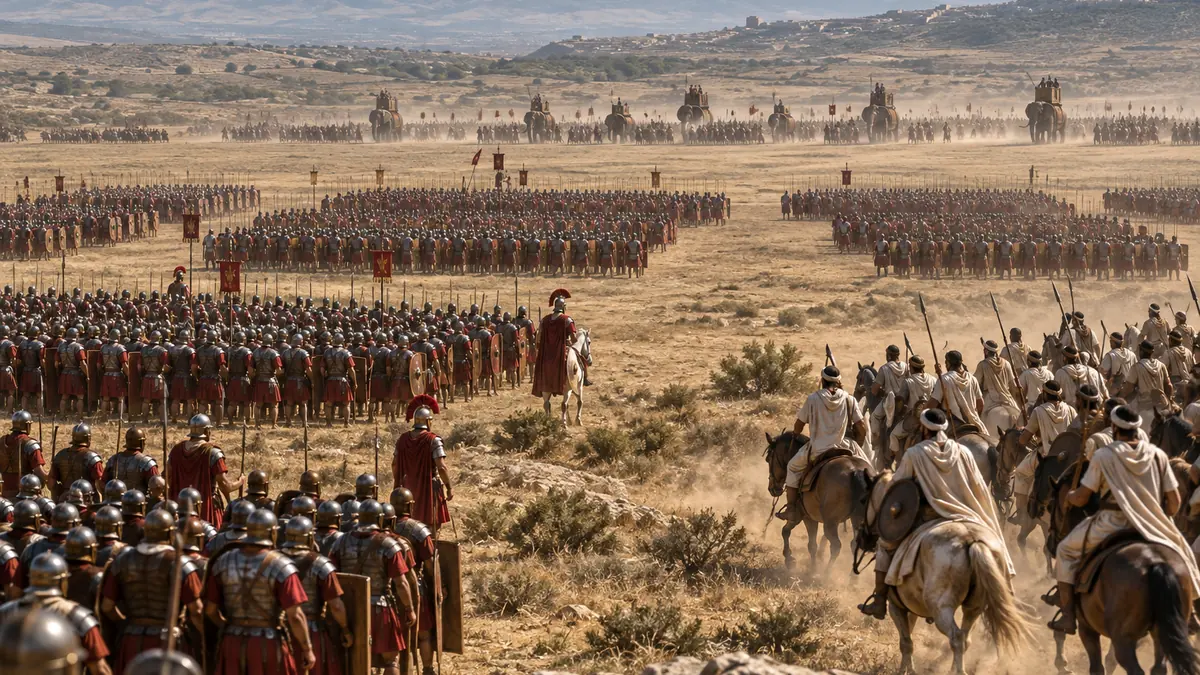
Battle of Zama Strategy: Adaptation, Cavalry, and the End of the Second Punic War
At Zama in 202 BCE, Scipio Africanus defeated Hannibal by combining Roman infantry discipline with Numidian cavalry and tactical preparation for elephants.…
Read article →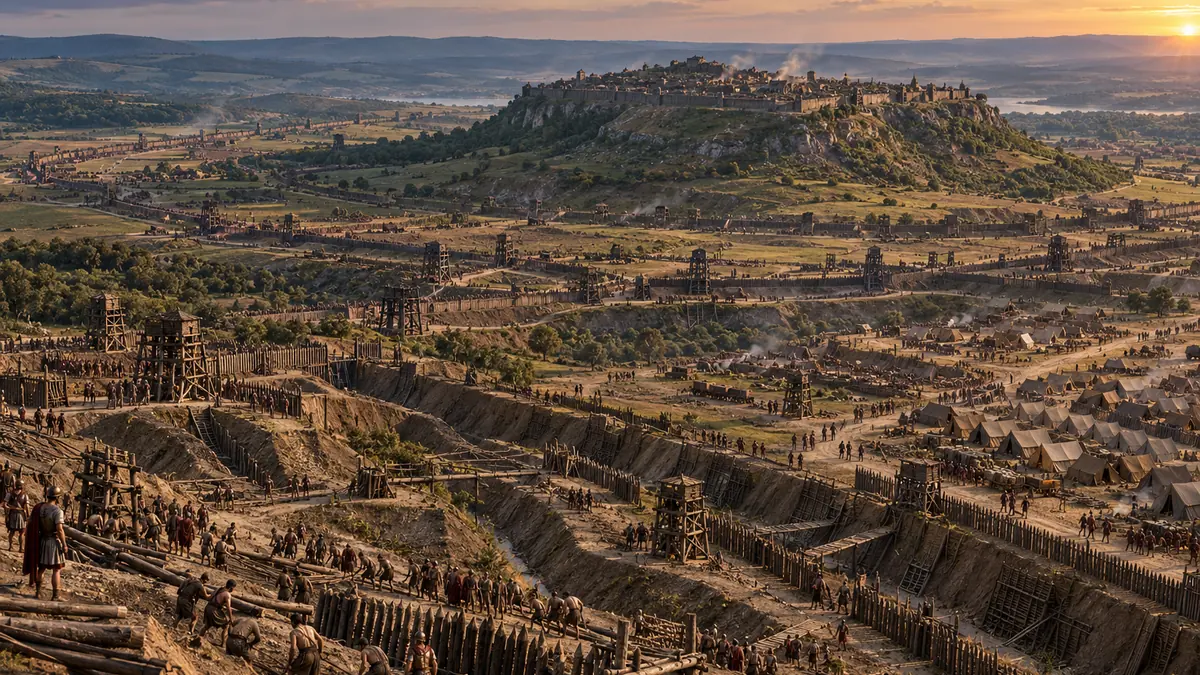
The Siege of Alesia: Engineering, Logistics, and the Two-Front Problem
At Alesia in 52 BCE, Caesar’s army besieged Vercingetorix while preparing for a relief army outside. The result became a famous demonstration…
Read article →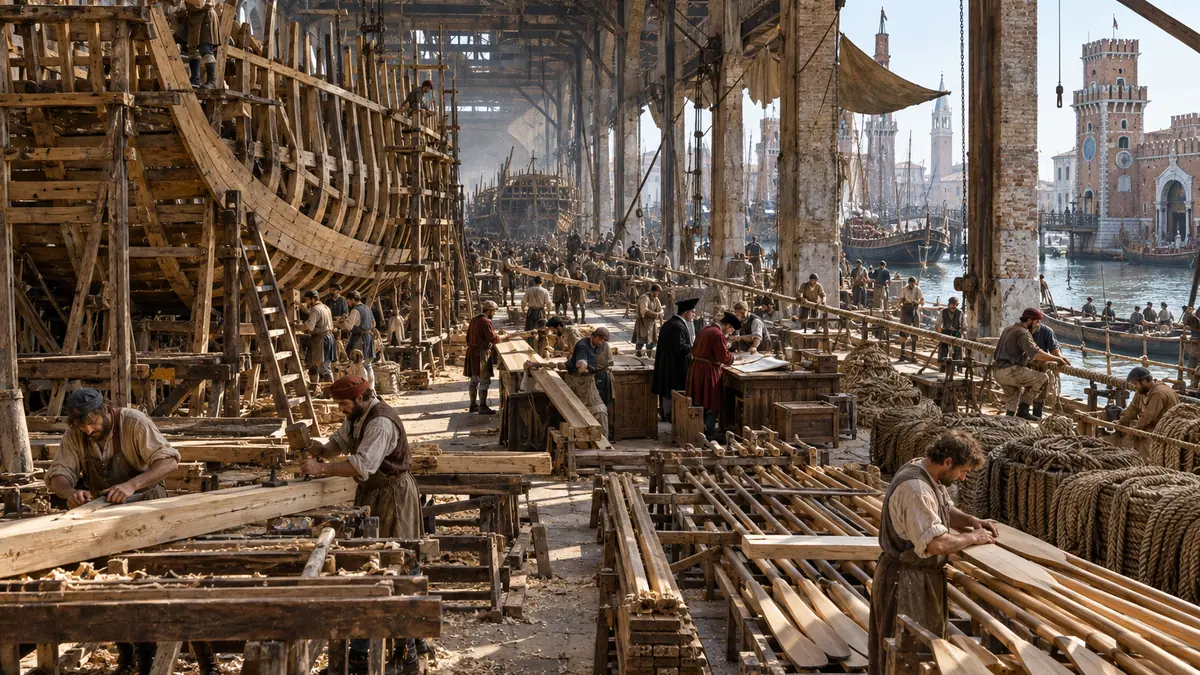
The Venetian Arsenal: How Venice Built an Early Industrial System
The Venetian Arsenal concentrated shipbuilding, storage, skilled labor, state control, and standardized processes at a scale that fascinated later observers. Its importance…
Read article →
Medici Banking: Networks, Accounting, Politics, and the Rise and Fall of a Financial Power
The Medici Bank became one of fifteenth-century Europe’s most influential financial institutions by combining branch networks, merchant banking, accounting, elite relationships, and…
Read article →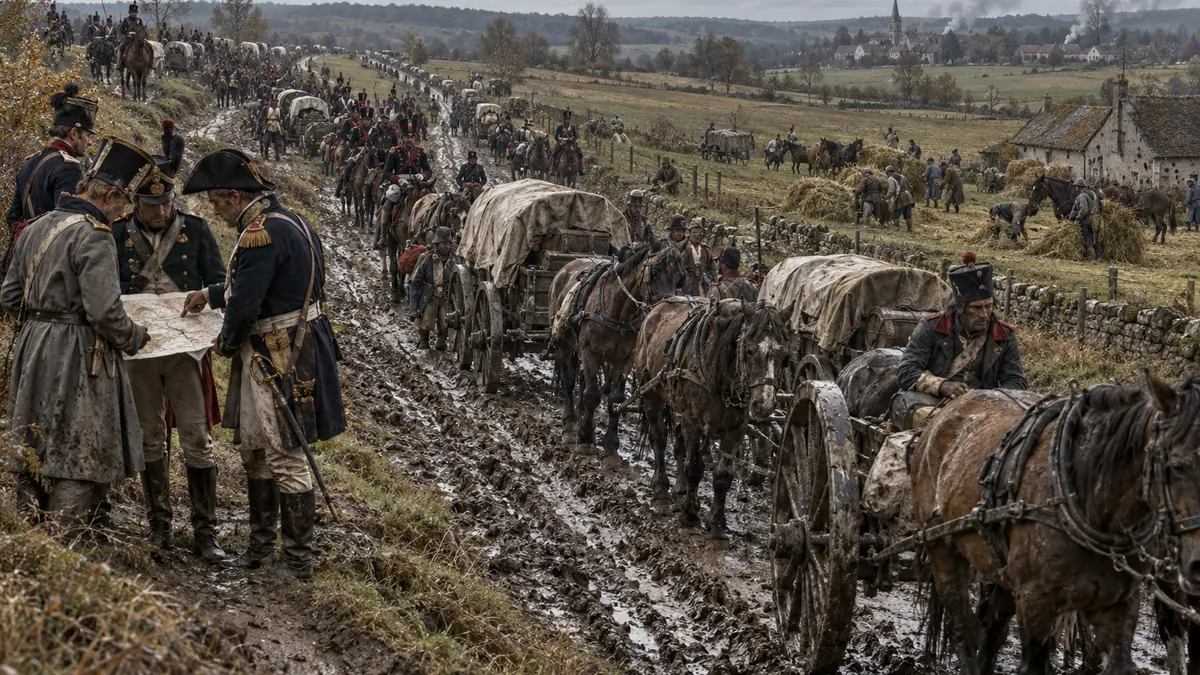
Napoleonic Logistics: Operational Speed—and the Limits of Living Off the Land
Napoleon’s armies are famous for speed, but speed depended on a complex mixture of magazines, requisition, dispersed marching, local supply, transport, and…
Read article →
Genghis Khan Logistics: Mobility, Intelligence, and Command at Scale
Mongol expansion depended on more than cavalry skill. Mobility, remounts, intelligence, disciplined command, communication, adaptable supply, and political incorporation allowed forces to…
Read article →