High-Performing Teams: What Great Teams Do Differently
High-performing teams are not simply groups of talented people. They are systems in which information moves, roles are clear, disagreement improves decisions, and people can coordinate without waiting for constant rescue from the leader.
Talent is not enough
Organizations often try to build great teams by collecting impressive individuals. That can help, but a team is not the sum of résumés. Performance depends on how people combine information, hand off work, challenge assumptions, recover from mistakes, and decide what matters when priorities collide.
A group of strong specialists can still underperform if goals are ambiguous, status suppresses dissent, incentives reward local wins, or decisions remain trapped at the top. Conversely, a team with less star power can outperform when the operating system is clear and members trust the process enough to contribute what they know.
Psychological safety is about information, not comfort
Research on team learning has made psychological safety a popular concept, but it is often softened into a promise that everyone should feel comfortable. The more useful interpretation is that people can speak about errors, uncertainty, disagreement, and weak signals without disproportionate interpersonal risk.
That matters because complex work depends on information that leaders do not possess. If junior people hide doubts, specialists protect their status, or bad news is delayed until it is undeniable, the team loses access to reality. Safety is valuable because it improves learning and coordination—not because difficult conversations disappear.
Clarity reduces coordination cost
High-performing teams usually know what outcome they are responsible for, what standards cannot be compromised, which tradeoffs matter, and who owns the next decision. Clarity reduces the number of conversations required to keep work moving.
This does not mean every task is specified. In knowledge work, excessive detail can slow judgment. The leader’s job is to make the boundaries and purpose clear enough that capable people can act without translating every uncertainty into an escalation.
Useful conflict is a performance advantage
Teams need a way to disagree without turning disagreement into a status contest. When conflict is suppressed, weak ideas survive. When conflict becomes personal, information is contaminated by defensiveness. High-performing teams separate the quality of an argument from the rank of the person making it.
One practical rule is to force competing interpretations into the open before a decision. Ask what evidence would support each view, what assumption creates the disagreement, and what new information would change the conclusion. The purpose is not endless debate. It is better compression of uncertainty before commitment.
Accountability works best when ownership is explicit
Accountability is often discussed as toughness after failure. Strong teams treat it earlier, at the point of ownership. Who decides? Who executes? What does done mean? What evidence will be reviewed? What happens if the assumption is wrong?
When these questions are clear, accountability becomes less theatrical. There is less need for public blame because the team already knows how work will be reviewed. See also leadership accountability for a broader discussion of decision ownership.
High-performing teams build shared mental models
Coordination improves when people understand not only their own task but enough of the surrounding system to anticipate consequences. Sales understands operational limits. Engineering understands customer urgency. Finance understands which capabilities are strategic rather than merely expensive.
These shared mental models are built through exposure, debriefs, cross-functional work, and repeated explanation of how decisions fit the whole. They reduce the need for constant synchronization because people can predict what other parts of the system will need.
The leader creates conditions, then gets out of the way
Leaders are responsible for team design, standards, context, incentives, and the handling of unresolved conflict. But a team cannot become high-performing if the leader remains the integration point for every meaningful decision.
The transition is deliberate: establish standards, teach the reasoning, delegate with guardrails, review outcomes, and resist taking work back simply because doing it personally would be faster once. Short-term speed can create long-term dependence.
Learning loops separate durable teams from lucky teams
A team can have a strong quarter because market conditions, a single expert, or timing worked in its favor. Durable performance requires a mechanism for learning. Postmortems, customer reviews, project retrospectives, and decision journals help distinguish repeatable capability from fortunate outcomes.
The best reviews avoid two traps: explaining every success as skill and every failure as incompetence. They ask what was known at the time, which assumptions were reasonable, what signals were missed, and what the team should change before the next cycle.
Historical perspective: disciplined formations were coordination systems
Military history offers vivid examples of coordination, but analogies should be used carefully. A Macedonian phalanx or Roman legion was not a modern company, and coercive military hierarchy is not a management model. Still, formations illustrate one enduring mechanism: individual capability creates value only when roles, timing, communication, and mutual dependence are coordinated.
The useful lesson is structural rather than heroic. A unit that breaks formation can lose the advantage created by training. Modern teams also depend on interfaces: handoffs, shared standards, and a common picture of what is happening.
How to diagnose your own team
Watch where work slows. Repeated escalations often indicate unclear authority. Repeated rework often indicates weak standards or poor shared context. Silent meetings can indicate fear, irrelevance, or lack of preparation. Endless meetings can indicate unclear ownership.
Do not begin by asking whether the team is motivated. Begin by looking at the system that shapes behavior. Motivation is easier to sustain when people can see progress, understand their contribution, and trust that useful information changes decisions.
Team design comes before team chemistry
Leaders sometimes spend enormous energy trying to improve interpersonal chemistry while ignoring structural flaws. A team can like one another and still fail because the scope is incoherent, the membership is unstable, decision authority is unclear, or people are rewarded for incompatible outcomes. Team design asks a simpler question: does this group have the right boundaries, skills, resources, and authority to accomplish what it is supposed to accomplish?
This is why team performance cannot be repaired only through workshops. If a team’s formal mandate conflicts with the incentives of its members, no amount of trust exercises will remove the underlying tension. Strong leaders treat team design as an operating decision, not a cultural afterthought.
Stability creates learning that turnover destroys
Teams learn how one another think. They build shortcuts, shared language, and expectations about who notices which kind of risk. Constantly changing membership can be necessary, but it also resets part of that learning. A team that is reorganized every quarter may never accumulate the tacit coordination that makes difficult work smoother.
This does not mean protecting a weak team forever. It means recognizing stability as an asset. When possible, change membership for a reason rather than because reorganization feels like action.
Meeting quality reveals team quality
Watch the team’s recurring meetings. Do they surface uncertainty, make decisions, and assign ownership? Or do they primarily transmit information that could have been read asynchronously? Meeting structure often reveals whether the team understands its own work.
A high-performing team distinguishes reporting from decision-making. Status can often be written. Shared time is more valuable for tradeoffs, diagnosis, conflict, and learning. When every meeting is a presentation, the team may be coordinating less than it appears.
Metrics can create local optimization
Teams are shaped by what gets measured. If sales is rewarded only for bookings while operations absorbs delivery complexity, the system encourages conflict. If engineering is rewarded only for speed while reliability costs are invisible, shortcuts become rational. Team metrics should therefore include enough shared outcomes to make cooperation economically sensible.
The goal is not to erase functional accountability. It is to prevent each function from winning locally while the organization loses globally.
Trust is built through predictable behavior
Trust is not merely emotional closeness. In work, trust often means predictability: people tell the truth early, keep commitments, admit uncertainty, and respond to problems without creating unnecessary punishment. These behaviors reduce defensive effort.
Leaders strengthen trust when standards are consistent. Arbitrary exceptions, hidden decisions, and status-based consequences teach people to protect themselves. Consistent process makes coordination faster because less energy is spent reading politics.
A practical team review cadence
Once a month, ask the team to review five things: the primary outcome, the biggest coordination bottleneck, one decision that was slower than it should have been, one example of useful disagreement, and one system change worth testing. Keep the review focused on operating behavior rather than generic morale.
The purpose is to make team effectiveness discussable. Teams improve faster when they have language for how they work, not only what they produce.
A 30-day team experiment
Choose one team process rather than attempting a broad culture change. In week one, map the decisions that repeatedly slow down and identify where ownership is ambiguous. In week two, redesign one decision with a clear owner, required inputs, and a review point. In week three, change one meeting so that it exists to decide or learn rather than report. In week four, review whether speed, clarity, or information quality changed.
The value of a bounded experiment is that it creates evidence. Team effectiveness discussions often become abstract because everyone agrees that trust and accountability are good. A specific operating change makes the conversation concrete: did fewer issues escalate, did decisions improve, and did people understand the new rule?
What to measure
Useful measures include decision cycle time, repeated escalations, rework, missed handoffs, meeting hours, employee turnover, customer defects, and the percentage of commitments completed when promised. None of these alone proves that a team is high-performing, but together they reveal whether coordination is improving.
Qualitative signals matter too. Are people raising bad news earlier? Are disagreements more specific? Do managers spend less time translating priorities? Does the team recover faster after an error? Performance is partly visible in how quickly the system learns.
Common failure modes
One failure mode is confusing harmony with performance. A team can be pleasant and avoid every difficult tradeoff. Another is confusing intensity with excellence: long hours and urgent messaging can hide poor prioritization. A third is overcentralization, where the leader becomes so involved that the team never develops collective judgment.
The countermeasure is to define performance through outcomes and mechanisms. Ask whether the team is clear, coordinated, candid, accountable, and capable of learning without excessive dependence on one person.
A practical checklist
- Can every member state the team’s primary outcome?
- Are decision rights explicit enough that routine work does not escalate upward?
- Can junior members challenge assumptions without social punishment?
- Do disagreements end in a decision and owner?
- Does the team review failures without rewriting history?
- Are incentives aligned with collective results rather than only local wins?
- Can the team keep functioning when the leader is temporarily absent?
Final idea
High-performing teams are built through design more than inspiration. Their advantage comes from clear purpose, credible standards, information flow, useful conflict, distributed judgment, and learning routines that make the system stronger after each cycle.
Continue Reading
Strategic Leadership: How to Make Better Long-Term Decisions Without Losing Today
Strategic leadership is the ability to hold today’s operating reality and tomorrow’s competitive position in the same decision. It requires breadth, longer…
Read article →
Leadership Styles Explained: When Each Approach Works—and When It Fails
The best leadership style is usually not one style. Effective leaders adjust how they direct, involve, coach, reward, and delegate based on…
Read article →Leadership Coaching: What It Is, How It Works, and When It Creates Results
Leadership coaching is useful when it improves the quality of thinking and behavior—not when it becomes expensive encouragement. The value comes from…
Read article →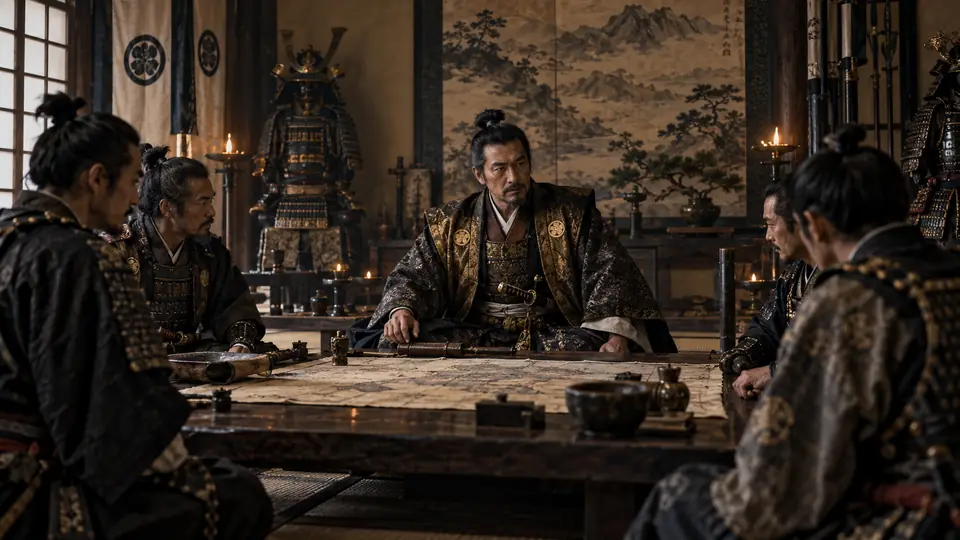
How Leaders Build Trust Without Becoming Too Lenient
Trust is not the absence of standards. People trust leaders when they believe the leader is consistent, capable, honest about reality, and…
Read article →
Emotional Intelligence in Leadership: How Self-Awareness Changes the Way You Lead
Leadership emotional intelligence is useful when it improves diagnosis and response under pressure while preserving standards, trust and decision quality.
Read article →
How Great Leaders Delegate Without Losing Control
Delegation is not pushing tasks downward. It is the deliberate transfer of responsibility, context, and decision rights so the organization can perform…
Read article →