Leadership Development: How to Build a Stronger Management Pipeline
Leadership development works when it changes what people can handle—not when it merely gives them a certificate. Strong programs connect assessment, experience, feedback, coaching, and real responsibility.
Training is not the same as development
A workshop can teach a model. Development changes capability. The difference matters because organizations often count attendance, completion, and satisfaction while assuming leadership capacity has improved.
A strong development program asks a harder question: what new level of complexity can this person now handle? Can they lead managers instead of individual contributors? Can they make cross-functional tradeoffs? Can they coach judgment rather than solve every problem themselves?
Start with the strategy, not a generic competency list
The capabilities an organization needs depend on its business model and next stage of growth. A company moving into enterprise sales may need stronger consultative leadership and cross-functional coordination. A company scaling operations may need process discipline and manager development.
Generic leadership competencies can provide a foundation, but the program should connect directly to the challenges leaders will actually face.
Assess before prescribing
Assessment creates a baseline. It can include self-reflection, manager input, 360 feedback, business performance, simulations, or observed behavior. The purpose is not to label people. It is to identify the few development priorities that matter most.
Without assessment, programs tend to give everyone the same content. That is convenient to deliver but weak as development because different leaders have different gaps.
Use stretch work as the core classroom
Leadership is learned partly through consequence. People need responsibility that forces them to coordinate others, make decisions under uncertainty, handle conflict, and live with the result.
Stretch assignments can include leading a new market entry, integrating a cross-functional project, managing a turnaround, owning a budget, or developing a successor. The work should be difficult enough to create learning but not so unbounded that failure becomes catastrophic.
Pair experience with feedback and reflection
Experience alone does not guarantee learning. People can repeat the same ineffective pattern for years. Feedback turns experience into information; reflection turns information into a different future response.
Programs should create structured debriefs: what happened, what assumptions were wrong, how others experienced the leader, what tradeoff was missed, and what should be tried next.
Develop managers of managers differently
Leading individual contributors and leading managers are different jobs. Managers of managers need to create systems through which other leaders perform. They need to calibrate talent, coach managers, allocate resources across teams, and manage a longer horizon.
A development pipeline should recognize these transitions rather than promoting people and expecting them to improvise a new identity.
Connect development to decision rights
People cannot develop judgment if meaningful decisions remain centralized. Development programs need corresponding changes in authority. Participants should receive real decisions with clear boundaries and review.
This is one reason leadership development and organizational design cannot be separated. A company can teach empowerment while retaining every approval at the top.
Build succession continuously
Succession planning should be a live view of capability, readiness, and experience—not a confidential list opened when someone resigns. Development assignments should be informed by future role needs.
Recent work from the Center for Creative Leadership emphasizes building future-ready leadership capacity rather than simply naming replacements. The pipeline is stronger when multiple people are being prepared for broader scope.
Measure the program through capability and business evidence
Useful measures include readiness for critical roles, internal promotion quality, time to productivity after promotion, retention of strong managers, bench strength, and whether important decisions can be made effectively below senior leadership.
No single measure proves causality, but the program should be able to show a credible path from development activity to changed behavior and improved organizational capacity.
Design the program as a journey, not an event
A useful leadership program has a before, during, and after. Before: assessment, manager alignment, and a real business challenge. During: concepts, practice, peer feedback, coaching, and simulations. After: stretch work, follow-up, and evidence that behavior changed in the workplace.
One-off workshops can still be valuable for targeted skills, but organizations should not confuse exposure with transformation. Development needs repeated cycles of action and reflection.
What to measure
Measure readiness, not only satisfaction. Can participants take on broader roles? Do promoted managers reach effectiveness faster? Are succession slates becoming stronger? Are decision bottlenecks moving downward? Do teams led by participants show healthier execution patterns?
Program feedback still matters, but it is a weak proxy for impact. The most enjoyable program is not necessarily the one that creates the most useful behavior change.
Common failure modes
One failure is overacademic design: too many models, not enough practice. Another is elite isolation, where only already-visible high potentials receive development while frontline management quality remains weak. A third is disconnected sponsorship: participants are trained to lead differently but return to managers who reward the old behavior.
Programs need senior sponsors who are willing to change the environment around participants. Otherwise development collides with the existing system.
A historical lens: mentorship plus responsibility
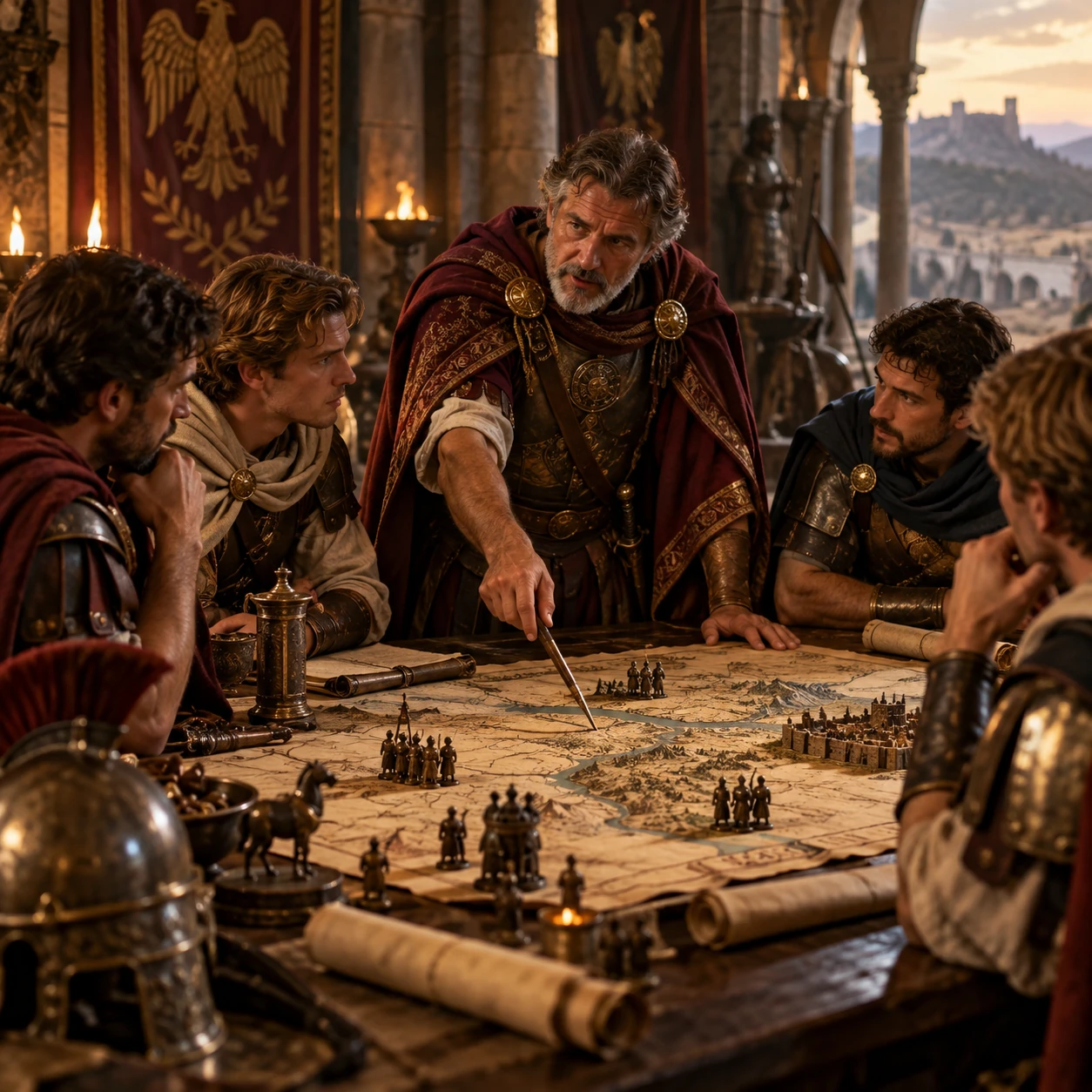
Historical elite formation often combined instruction with apprenticeship: observation, mentorship, travel, military or administrative responsibility, and exposure to increasingly consequential decisions. The specific traditions differed, but knowledge was rarely expected to substitute for experience.
Modern leadership development is strongest when it follows the same developmental logic without romanticizing the past: teach the model, provide real responsibility, create feedback, and expand scope based on demonstrated judgment.
Implementation playbook
Map every program module to a real leadership challenge. If the module is about influence, participants should bring a live stakeholder problem. If it is about delegation, they should identify a decision they currently retain. If it is about strategic thinking, they should work on an actual business assumption. This makes transfer more likely because learning is attached to the work.
Managers of participants should also be involved. A short sponsor conversation before and after the program can clarify the development target, create a stretch opportunity, and confirm what behavior should be reinforced back on the job.
Questions worth asking
- Which business challenge is this program meant to improve?
- What behavior should participants do differently afterward?
- Where will they practice it in real work?
- Who will provide feedback?
- What decision rights need to expand?
- How will we know capability increased rather than attendance?
A practical operating checklist
- Define the business capabilities the strategy requires.
- Assess current leadership behavior before assigning development.
- Choose a few priorities rather than a long competency wish list.
- Use real stretch assignments, not classroom content alone.
- Build feedback and coaching around live work.
- Expand decision rights as capability grows.
- Track succession readiness continuously.
- Measure whether the organization can handle more complexity with less dependence on a few senior people.
Frequently asked questions
What is leadership development program?
Leadership development works when it changes what people can handle—not when it merely gives them a certificate. Strong programs connect assessment, experience, feedback, coaching, and real responsibility.
Why does leadership development program matter?
It matters because leadership changes how people interpret priorities, make decisions, coordinate work, surface risk, and take responsibility under real constraints.
Can this capability be developed?
Yes. It develops through real responsibility, specific feedback, reflection, deliberate practice, and progressively harder situations rather than theory alone.
What is a common mistake?
A common mistake is focusing on leadership image or personality while ignoring the operating mechanisms—decision rights, standards, context, incentives, communication, and review—that shape behavior.
How should a leader start applying it?
Choose one live situation, define the behavior or decision that needs to improve, make the standard visible, practice it in real work, and review the evidence afterward.
Final idea
A leadership development program should create leaders who can carry more complexity, make better decisions, and develop others. The program is successful when capability shows up in the operating system—not only in a learning portal.