Roman Empire Emperors: Who Ruled Rome and What Their Leadership Reveals About Power
Rome’s emperors ruled through more than force. Their success depended on armies, legitimacy, administration, succession and the ability to make personal power look institutional.
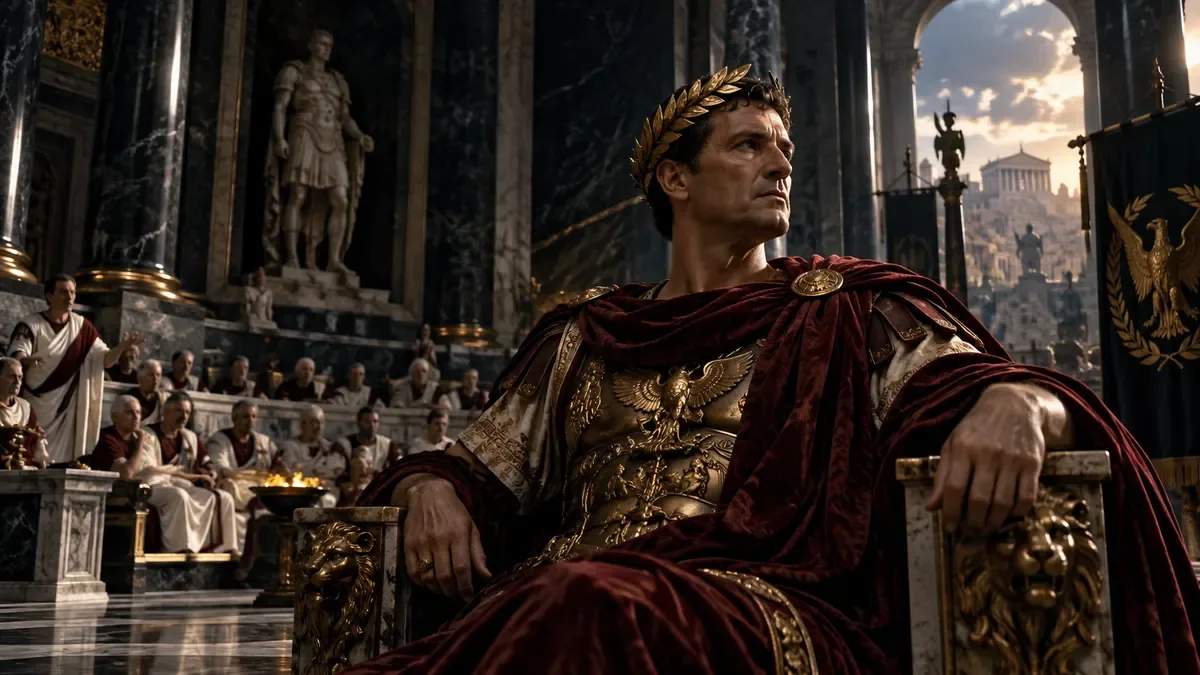
The emperor was never just a man on a throne
Roman imperial power looked absolute from the outside, but the position was structurally fragile. An emperor had to command armies, manage the Senate, reward supporters, administer provinces, secure revenue, project legitimacy and survive the problem that haunted the system from the beginning: succession. A ruler who ignored any one of these could discover that formal authority was less secure than it appeared.
This is why the Roman emperors are useful to study as leadership cases rather than as a parade of names. The office magnified both competence and weakness. Strong rulers built systems around themselves; weak rulers often mistook access to power for mastery of it.
Augustus: the architecture of durable power
After decades of civil war, Octavian emerged as the dominant figure in the Roman world. In 27 BCE he received the name Augustus. Instead of openly presenting himself as a king, he preserved republican forms and titles while concentrating decisive authority. This arrangement became the Principate.
The strategic lesson is not simply “control the narrative.” Augustus aligned symbols, institutions and incentives. He gave elites roles to perform, rewarded military loyalty, used public works and imagery to communicate order, and made a new political reality feel less like a rupture. Durable power often depends on making change legible and acceptable to the people who must live inside it.
The army: the ultimate source of regime risk
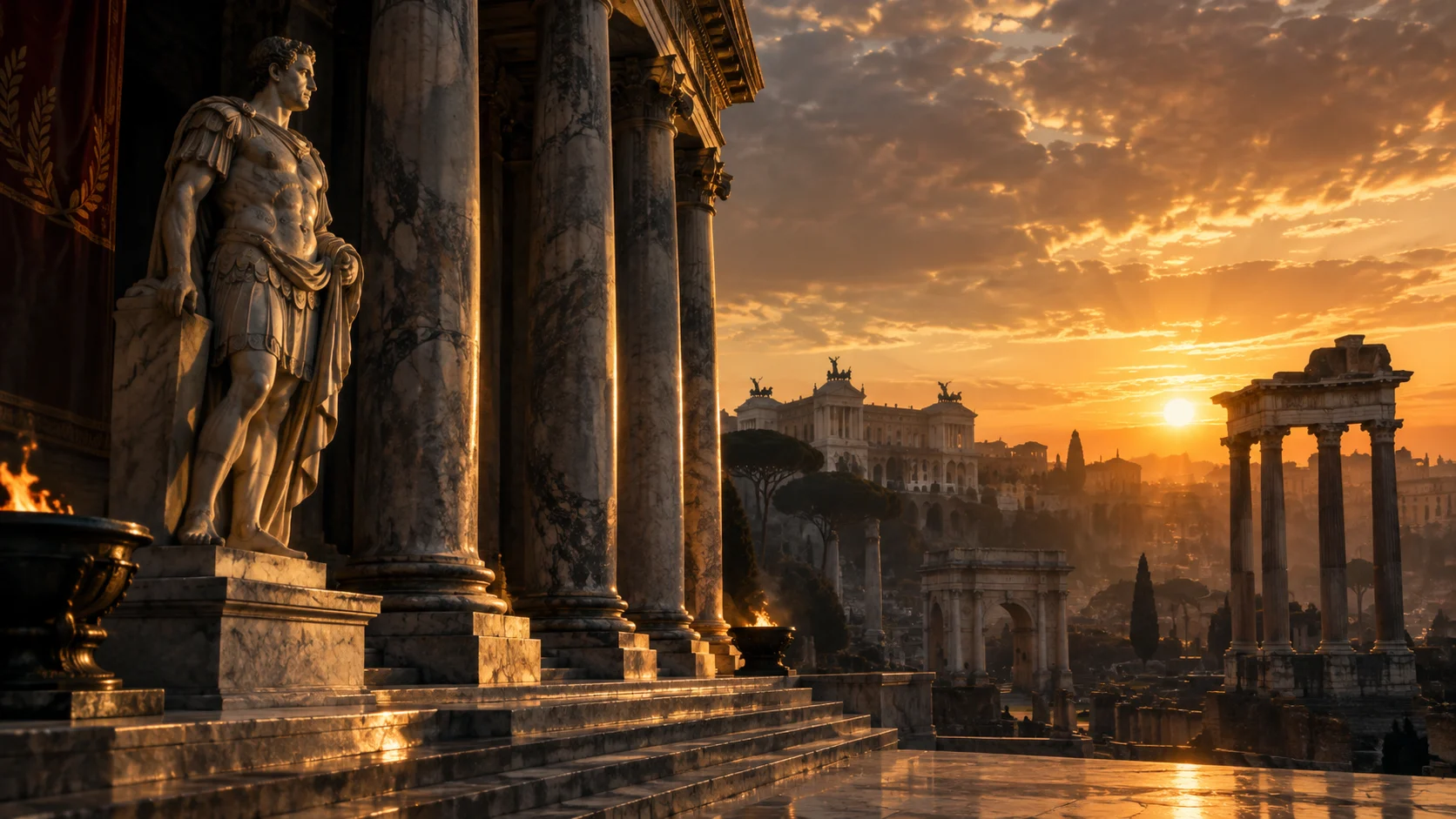
No emperor could afford to forget the legions. Military success created legitimacy; military discontent could destroy it. Over time, armies and the Praetorian Guard became decisive actors in imperial succession. This created a dangerous feedback loop: rulers needed military loyalty, loyalty required rewards, and the expectation of rewards increased the political leverage of soldiers.
Modern organizations face a softer version of the same problem. A leader who depends too heavily on one constituency — top salespeople, engineers, financiers, political allies — may find that dependency turns into veto power. Concentrated support can stabilize a regime and weaken it at the same time.
Trajan and Hadrian: expansion versus consolidation
Trajan is associated with Rome’s greatest territorial extent. Hadrian, his successor, is remembered more for consolidation, travel across the provinces and defensive works such as Hadrian’s Wall. Their contrast captures a recurring strategic tension: growth creates glory, while consolidation protects what growth has created.
Organizations often over-reward expansion because expansion is visible. Consolidation is quieter: systems, borders, standards, logistics, integration. Yet empires and companies both fail when the cost of holding gains exceeds the prestige of acquiring them.
Marcus Aurelius: character under pressure
Marcus Aurelius ruled from 161 to 180 CE and faced war, internal instability and the Antonine Plague. His Meditations show a ruler repeatedly reminding himself to control judgment, perform duty and resist vanity. That private practice matters because power amplifies emotional errors. An insecure person with more authority does not become secure; the insecurity gains resources.
Marcus is not useful because he was flawless. He is useful because the notes reveal the continuous effort required to remain governed by standards when the environment is not calm.
Commodus: when role becomes performance
The succession from Marcus Aurelius to Commodus remains one of history’s most discussed contrasts. Commodus increasingly personalized rule, identified with Hercules and participated publicly in arena performances. His reign ended violently in 192, followed by renewed political instability.
The broader lesson is that institutions become fragile when the office turns into a stage for the officeholder’s identity. Leaders who need the organization to validate them are more likely to consume the institution for personal theater.
The third-century crisis: what happens when succession breaks
During the third century, rapid imperial turnover, civil wars, external pressure and economic disruption exposed how costly unstable succession could become. The emperor’s position could be won and lost through military support, making long-term institutional continuity difficult.
Succession is not an administrative detail. It is a core leadership function. A system that performs well only while one exceptional individual is present is not yet a durable system.
The real lesson of the emperors
Rome’s emperors show that power has at least four dimensions: force, legitimacy, administration and succession. A ruler can be strong in one and weak in another. Military brilliance cannot compensate forever for institutional chaos. Public popularity cannot substitute for logistics. A stable court cannot survive repeated fiscal failure.
The most durable leaders understood that power had to be converted into systems. The weakest treated power as a personal possession. Rome’s history is the record of what happened next.
Five recurring leadership tests in imperial Rome
Across centuries, emperors faced recurring tests even as personalities changed. The first was military loyalty: could the ruler command without becoming captive to the forces that protected him? The second was elite management: could he work with the Senate and administrative class without allowing rivalry to become paralysis? The third was provincial governance: could distant territories be taxed, defended and integrated without constant coercion?
The fourth was legitimacy: could the emperor persuade enough people that his authority was normal, beneficial or divinely favored? The fifth was succession. Rome repeatedly demonstrated that a ruler can govern well and still leave a dangerous system behind if the transfer of power is unclear.
Why “good emperor” and “bad emperor” are too simple
Ancient sources were written by authors with their own class interests, political loyalties and literary goals. Senators could judge an emperor differently from soldiers or provincials. A ruler remembered as oppressive by elite writers might still have enjoyed support elsewhere; a ruler praised for restraint could still preside over violence at the edges of empire.
That does not make historical judgment impossible. It makes context necessary. Leadership analysis improves when we ask: good for whom, over what time horizon, and by which institutional measure? The same discipline is useful when evaluating modern executives and founders.
A modern leadership lens from Rome
- Convert personal authority into repeatable institutions.
- Do not let one constituency become powerful enough to hold the entire system hostage.
- Treat succession as a design problem long before transition becomes urgent.
- Separate public symbolism from operational performance, but neglect neither.
- Know when expansion is strengthening the system and when it is merely increasing the perimeter to defend.
Rome’s scale makes these principles vivid, but the underlying mechanics appear anywhere people coordinate around scarce resources, hierarchy and trust.
Leadership under empire: the danger of information filters
The larger the system, the harder it becomes for the person at the top to know what is actually happening. Roman emperors depended on governors, military commanders, court officials and messengers. Every layer could delay, distort or strategically frame information. A ruler surrounded by agreement could be powerful and badly informed at the same time.
This is another durable lesson from Rome: authority increases the need for independent information. Leaders should create channels for bad news, reward accurate dissent and compare reports from people with different incentives. Otherwise hierarchy becomes an information machine that tells the leader what the hierarchy thinks the leader wants to hear.
A question Rome leaves every leader
If your authority disappeared tomorrow, which systems would still work? The answer separates leadership from dependence. Rome repeatedly shows the danger of institutions that rely on one person’s prestige, fear or competence. The mature leader uses power to build mechanisms that can survive the leader — clear succession, honest information flows, disciplined incentives and roles that remain functional when personalities change.
Power also changes the person who holds it
Rome is full of examples of rulers whose environment became increasingly artificial as their authority grew. Fewer people could contradict them safely; praise became easier to obtain; consequences could be pushed downward. This is a structural danger of power, not merely a character flaw. The more powerful the leader, the more deliberately he must build contact with reality.
Modern leaders can counter the effect by creating independent metrics, listening to customers without filters, keeping trusted dissenters close and separating loyalty from agreement. A court that never delivers bad news is comfortable precisely until the moment reality arrives all at once.
Continue Reading
Careless People Review: Power, Incentives, and the Cost of Executive Blind Spots
A source-backed review of Sarah Wynn-Williams’s Careless People, separating disputed allegations from durable lessons on power, incentives, culture, information flow, and governance.
Read article →Management Skills: 15 Skills Every Effective Manager Needs
Management is not a personality type. It is an operating system for clarity, delegation, feedback, decisions, resources and accountability.
Read article →Conflict Resolution Skills: How to Handle Disagreement Without Losing Trust
Conflict resolution is a diagnosis-and-design skill: identify the real conflict, uncover interests, create options, and make the agreement executable.
Read article →Roman Engineering: The System Behind Concrete, Roads, Aqueducts, and Monumental Scale
Rome’s engineering edge came from integrating materials, surveying, reusable structures, logistics and maintenance across a vast operating network.
Read article →