Tag: tofu

  • What Is Stoicism? A Practical Guide for Ambitious People

    Stoicism • TOFU

    What Is Stoicism? A Practical Guide for Ambitious People

    Stoicism is not emotional numbness. It is a system for separating judgment from noise, directing effort toward what can be influenced, and acting with standards under pressure.
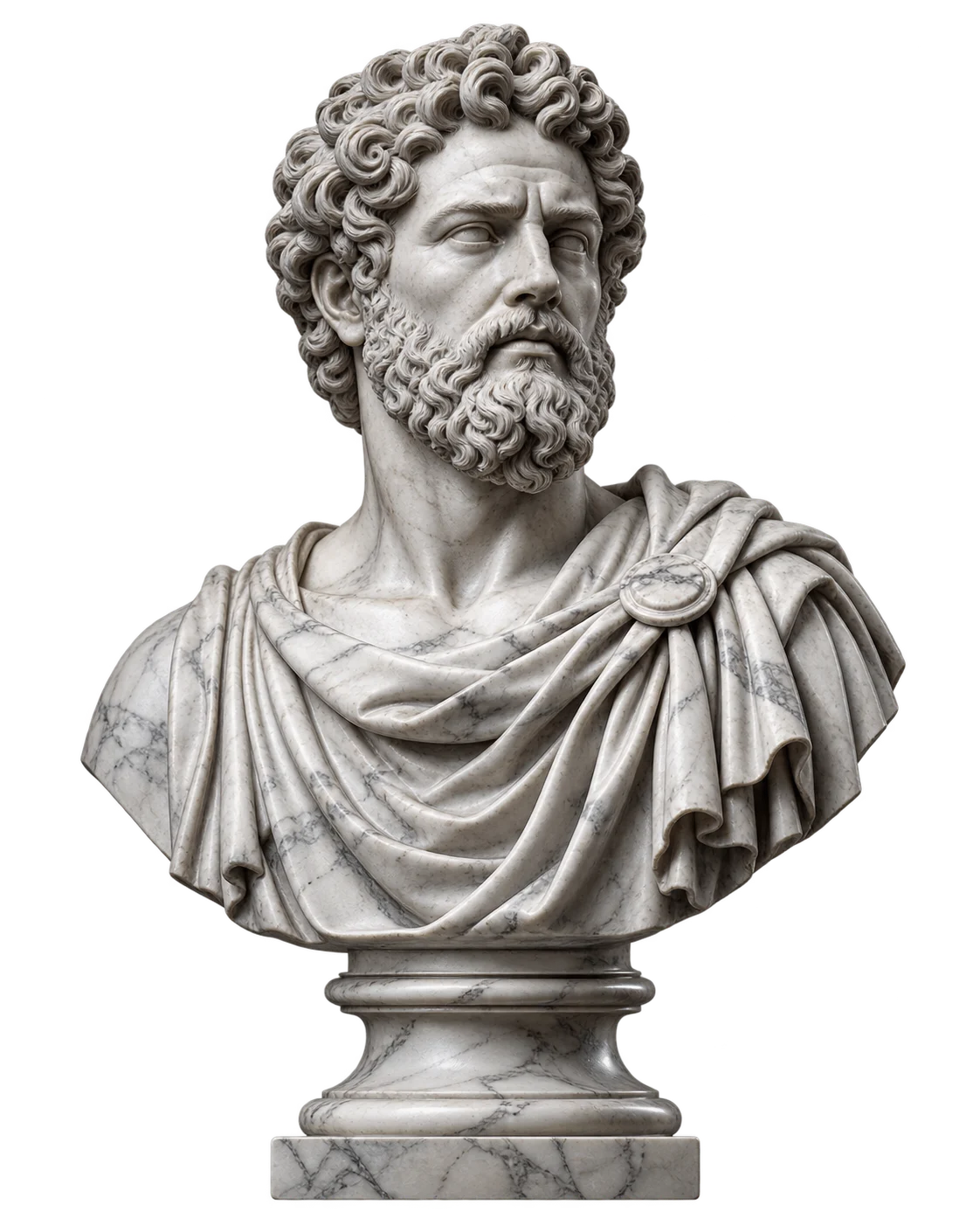

    What Is Stoicism? A Practical Guide for Ambitious People

    Stoicism is older — and richer — than the internet version

    Stoicism began as a Hellenistic school of philosophy around the third century BCE and later became deeply associated with Roman thinkers such as Seneca, Epictetus and Marcus Aurelius. The modern internet version often compresses all of this into a single instruction: stay calm. That misses the more useful point. Stoicism is a philosophy of judgment, character and action.

    For an ambitious person, the value is not learning to suppress emotion. It is learning to prevent the first emotional interpretation of an event from becoming the final decision. Markets move. People disappoint you. Projects fail. Reputation fluctuates. The Stoic question is not whether those events matter. It is whether they deserve control over the quality of your response.

    The first operating principle: separate control from concern

    Many people spend enormous mental energy on variables they can observe but cannot command: the economy, a competitor’s behavior, someone else’s opinion, the algorithm, a difficult client’s mood. Stoicism asks you to distinguish these from the variables that belong more directly to your agency: preparation, standards, effort, interpretation, attention and the next action.

    This distinction is not passive. In fact, it can be aggressive in the best sense. Once energy is no longer wasted negotiating with reality, it can be concentrated on the few actions that can still change the outcome.


    The second principle: judgments create unnecessary suffering

    Events arrive with facts. The mind quickly adds a story. A customer delays a decision; the story becomes 'the offer is bad.' A competitor launches a product; the story becomes 'we are behind.' A bad month becomes evidence that the entire plan is broken.

    Stoic practice creates a gap between event and interpretation. In that gap, the operator can ask: What do I actually know? What am I assuming? What would another explanation look like? What response would still make sense if my first story is wrong?

    The third principle: character is a strategic asset

    Classical Stoicism placed virtue at the center of the good life. In modern operating language, this means standards that do not disappear when incentives become inconvenient. Reliability, courage, restraint, justice and good judgment become part of how decisions are made.

    That matters in business because pressure reveals the real operating system. Values written on a wall are weak evidence. The better evidence is what happens when revenue is down, a deadline is missed or a shortcut becomes available.

    A practical Stoic protocol for difficult days

    When pressure rises, use a short sequence: describe the event without adjectives; separate controllable from uncontrollable variables; name the interpretation you are adding; decide which standard should govern the response; take the smallest useful action immediately.

    This protocol does not make uncertainty disappear. It prevents uncertainty from consuming the part of the situation that still belongs to you.

    Working principles
    • Control attention before trying to control outcomes.
    • Separate facts from interpretations.
    • Use standards to govern repeated decisions.
    • Treat calm as a consequence of clarity, not the objective.
    The Daily Letter

    One useful idea. No noise.

    Sharp ideas on wealth, discipline, leadership and better judgment for people serious about growth.

    Join the list →

    Sources & further reading

    • Stoicism — Stanford Encyclopedia of Philosophy

    Continue Reading
  • How Compounding Really Works: Time, Capital and Behavior

    Wealth • TOFU

    How Compounding Really Works: Time, Capital and Behavior

    Compounding is not only a formula. It is what happens when good financial decisions survive long enough to build on previous good decisions.

    How Compounding Really Works: Time, Capital and Behavior

    The mathematics are simple. The behavior is not.

    Compound growth means returns can begin earning returns. Investor.gov illustrates the mechanics with initial capital, recurring contributions, time, expected return and compounding frequency. The equation is straightforward. Living with the equation for ten, twenty or thirty years is the difficult part.

    Most people do not interrupt compounding because they misunderstand multiplication. They interrupt it because life creates pressure to consume, react, chase, withdraw, overtrade or increase lifestyle costs faster than assets.

    Time is not a detail — it is a multiplier

    Early years often look unimpressive because the base is still small. This creates a psychological problem: humans like visible progress. Compounding often rewards behavior before it rewards the eye.

    The longer capital remains productive, the greater the share of future growth that can come from previous growth rather than new effort. That is why unnecessary interruption has a cost that is larger than the money removed today.

    Contributions matter more than people want to admit

    At the beginning of a wealth-building process, regular contributions often matter more than clever optimization. A person with a modest return and consistent additions can build a stronger base than someone constantly searching for exceptional returns while saving irregularly.

    This is an important mindset shift. You do not need every financial decision to be brilliant. You need enough good decisions to remain in place long enough to accumulate.

    Lifestyle compounds too

    Compounding is usually described as a positive force, but recurring expenses can compound against flexibility. When every raise creates a larger permanent baseline, more future income becomes pre-committed.

    The result can be paradoxical: earnings rise while strategic freedom falls. Wealth should eventually increase the number of choices available to you, not merely the price of the life you are required to maintain.

    The real compounding engine is behavior

    Good behavior does not guarantee a specific return. It does increase the chance that your capital remains available to benefit from time. Avoiding catastrophic leverage, keeping sufficient liquidity, contributing consistently and resisting status-driven consumption are not exciting strategies. They are survival strategies.

    Compounding rewards what survives.

    Working principles
    • Time magnifies both good allocation and costly mistakes.
    • Consistent contributions are a major part of the engine.
    • Lifestyle inflation can reduce optionality even as income rises.
    • The ability to stay invested is partly a behavioral skill.
    The Daily Letter

    One useful idea. No noise.

    Sharp ideas on wealth, discipline, leadership and better judgment for people serious about growth.

    Join the list →

    Sources & further reading

    Continue Reading
  • Why Discipline Beats Motivation When the Goal Is Long-Term Growth

    Discipline • TOFU

    Why Discipline Beats Motivation When the Goal Is Long-Term Growth

    Motivation can start the engine. Discipline is what keeps the system running when novelty disappears, energy drops and nobody is watching.

    Why Discipline Beats Motivation When the Goal Is Long-Term Growth

    Motivation is an emotional state, not an operating system

    Motivation is useful. It creates energy, urgency and the willingness to begin. The problem is that it is sensitive to sleep, stress, novelty, feedback, weather, social comparison and immediate results.

    If your plan requires you to feel inspired before execution, the plan has outsourced control to a variable that changes constantly.

    Discipline reduces the number of votes your mood receives

    Disciplined people still experience resistance. The difference is structural. Certain actions have already been decided: the training session, the weekly review, the savings transfer, the writing block, the sales calls, the hour without notifications.

    By converting repeated choices into standards, discipline reduces the mental negotiation that precedes action.

    Willpower should protect the system, not power every repetition

    Psychological research on self-control has long examined the difficulty of resisting short-term temptations in service of longer-term goals. A practical conclusion is that relying on deliberate self-control at every moment creates unnecessary friction.

    Good systems lower the number of moments in which heroic restraint is required. The phone is outside the room. The automatic transfer is already scheduled. The calendar has already protected the block.

    Build a minimum standard for bad days

    High standards become fragile when the only acceptable version is the perfect version. A better design includes a floor. On a strong day, the workout is sixty minutes. On a terrible day, the standard may be ten. The point is to preserve identity and continuity.

    Intensity produces memorable days. Continuity produces evidence.

    Discipline is self-trust accumulated

    Every promise kept becomes evidence that your future instructions are credible. Every repeated exception teaches the opposite. Over time, discipline changes the relationship between intention and action.

    That is why the deepest benefit is not productivity. It is self-trust.

    Working principles
    • Use motivation to start, not to govern the system.
    • Turn repeated choices into defaults.
    • Design the environment to reduce unnecessary temptation.
    • Protect continuity with a minimum standard.
    The Daily Letter

    One useful idea. No noise.

    Sharp ideas on wealth, discipline, leadership and better judgment for people serious about growth.

    Join the list →

    Sources & further reading

    Continue Reading
  • Decision Fatigue: Why High Performers Protect Their Attention

    High Performance • TOFU

    Decision Fatigue: Why High Performers Protect Their Attention

    The cost of a fragmented day is not only lost time. It is lower-quality judgment when the decisions that matter finally arrive.

    Decision Fatigue: Why High Performers Protect Their Attention

    Your calendar spends cognitive energy before you notice it

    A day filled with minor choices can feel harmless because each decision is small. Which message should be answered first? Should this meeting be moved? Which tool should be used? Should the proposal be revised again? Each one requires context, evaluation and a small commitment.

    The problem appears later when an important decision arrives and the mind is already carrying residue from dozens of low-value choices.

    Interruptions do not end when the interruption ends

    Research on interruption and distraction has documented performance costs and the cognitive difficulty of resuming interrupted tasks. Complex work depends on a mental model of the problem. A notification can break that model even when the notification itself takes only seconds.

    This is why protecting deep work is not aesthetic productivity advice. It is protection of the cognitive state required for integration.

    Reduce low-value decisions with defaults

    Executives and operators often become more effective when routine decisions are standardized. Templates, recurring schedules, spending thresholds, meeting rules and escalation criteria reduce the number of decisions that require fresh analysis.

    A default is not laziness. It is a way of reserving judgment for situations where judgment changes the outcome.

    Create a cognitive prime-time policy

    Most people have hours in which their thinking is clearer. Those hours should not be sold at the same price as administrative time. Put strategy, writing, hard analysis and consequential conversations into the strongest window when possible.

    The goal is not a perfect routine. It is to stop giving your best attention to the easiest incoming request.

    Attention is a capital allocation problem

    Every open tab, message, meeting and unfinished loop competes for a scarce internal resource. Treat attention like capital: some goes to maintenance, some to exploration, and a protected share should go to work that compounds.

    The question is not 'How do I get more done?' It is 'What deserves access to my best cognition?'

    Working principles
    • Default recurring low-value decisions.
    • Protect uninterrupted blocks for high-leverage work.
    • Schedule hard thinking when cognition is strongest.
    • Treat attention as an asset with an allocation policy.
    The Daily Letter

    One useful idea. No noise.

    Sharp ideas on wealth, discipline, leadership and better judgment for people serious about growth.

    Join the list →

    Sources & further reading

    Continue Reading
  • What Is Capital Allocation? A Simple Guide for Founders

    Business • TOFU

    What Is Capital Allocation? A Simple Guide for Founders

    Capital allocation is the discipline of deciding where money, people and attention should go — and what should stop receiving them.

    What Is Capital Allocation? A Simple Guide for Founders

    Strategy becomes real when resources move

    A strategy deck can say a company prioritizes growth, product quality or a new market. Capital allocation reveals whether that statement is true. Money, talent and leadership attention are finite. Where they go is the strategy expressed in operational form.

    McKinsey has repeatedly emphasized that effective allocation should be strategy-driven rather than simply reproducing historical budgets.

    Capital is broader than cash

    Founders often hear 'capital allocation' and think only about investment dollars. The concept is broader. Senior talent, engineering capacity, sales coverage, executive attention, inventory and calendar time are all scarce resources.

    A company can have plenty of cash and still allocate badly if its best people are trapped in low-leverage work.

    Every yes contains a hidden no

    Opportunity cost is unavoidable. Funding one initiative means not funding another at the same level. Hiring for one team may delay another. Keeping an underperforming project alive can consume the exact people required by a stronger opportunity.

    Good allocation therefore includes subtraction. Strategy is partly the courage to stop feeding activities that no longer justify their claim on resources.

    Use explicit return logic

    Not every initiative can be reduced to a clean ROI calculation, especially early product work or brand investments. But every major allocation should have a reason. What are we trying to change? What evidence would show progress? What would make us stop? What other opportunity are we delaying?

    The discipline is not false precision. It is making the logic visible enough to challenge.

    Reallocation is a leadership habit

    Annual budgeting can create inertia because last year’s structure becomes next year’s default. Strong operators review whether resources still match current opportunities and risks.

    Capital allocation is not a once-a-year finance exercise. It is an ongoing leadership practice.

    Working principles
    • Treat talent and attention as capital, not only cash.
    • Make opportunity cost visible.
    • Define the logic behind major allocations.
    • Reallocate when reality changes.
    The Daily Letter

    One useful idea. No noise.

    Sharp ideas on wealth, discipline, leadership and better judgment for people serious about growth.

    Join the list →

    Sources & further reading

    Continue Reading
  • Second-Order Thinking: How to Make Decisions Beyond the First Result

    Decision Making • TOFU

    Second-Order Thinking: How to Make Decisions Beyond the First Result

    First-order thinking asks what happens next. Second-order thinking asks what happens after that — and what new incentives the first decision creates.

    Second-Order Thinking: How to Make Decisions Beyond the First Result

    Most bad decisions look reasonable at first

    The first consequence of a decision is usually the easiest to see. Lower the price and sales may increase. Add meetings and coordination may improve. Hire faster and capacity rises. Borrow more and growth accelerates.

    The harder question is what those actions change next: customer expectations, team behavior, fixed costs, future pricing power, risk tolerance or the quality of information.

    Every decision changes incentives

    Second-order thinking becomes more useful when you stop treating people as static. A new compensation rule changes behavior. A generous exception changes what customers ask for next. A founder who rescues every project teaches the organization that ownership is optional.

    The important consequence may not be the immediate result. It may be the behavior that the result trains.

    Use three time horizons

    For meaningful decisions, ask what is likely to happen immediately, what may happen after the system adapts, and what becomes difficult to reverse over a longer horizon.

    This simple structure prevents the first visible benefit from monopolizing the analysis.

    Invert the decision

    Instead of asking only how a decision can succeed, ask how it could create a problem you would regret. What dependency are you creating? What optionality are you giving away? What behavior are you rewarding? What new fixed cost appears?

    Inversion does not make you pessimistic. It makes the downside easier to see before it becomes structural.

    Second-order thinking is not endless analysis

    There is a danger in turning every decision into an intellectual maze. The objective is not to predict every consequence. It is to identify the few plausible downstream effects that are large, sticky or asymmetric.

    Think deeper, then decide.

    Working principles
    • Ask what happens after the first result.
    • Look for changed incentives and dependencies.
    • Use immediate, adaptive and long-term horizons.
    • Focus on downstream effects that are large or hard to reverse.
    The Daily Letter

    One useful idea. No noise.

    Sharp ideas on wealth, discipline, leadership and better judgment for people serious about growth.

    Join the list →

    Sources & further reading

    Continue Reading
  • What Makes a Great Operator? Systems, Leverage and Execution

    Business • TOFU

    What Makes a Great Operator? Systems, Leverage and Execution

    Great operators do not simply work harder. They make the organization easier to operate by removing friction, clarifying ownership and building leverage.

    What Makes a Great Operator? Systems, Leverage and Execution

    Operators convert ambiguity into movement

    Many companies have no shortage of ideas. The shortage is translation: turning an objective into owners, sequence, constraints, metrics and a next action that can actually begin.

    A great operator does not wait for every variable to become clear. They create enough structure for the team to move without pretending uncertainty has disappeared.

    They look for bottlenecks, not busyness

    Throughput is often limited by one or two constraints: approval latency, missing information, a fragile supplier, an overloaded manager, poor qualification, unclear ownership. Making every department 'work harder' can increase noise without increasing output.

    Strong operators learn to find where work waits.

    They reduce recurring friction

    Every repeated confusion is a candidate for system design. If the same question appears every week, create a rule. If the same handoff fails, redesign the handoff. If the same data must be rebuilt manually, automate or standardize it.

    Operational excellence is usually the accumulation of many small removals.

    They create leverage

    Leverage means one unit of good thinking can improve many future actions. A strong onboarding document, decision rule, automation, dashboard or training system keeps producing value after the original effort is finished.

    Great operators are constantly asking which problem can be solved once instead of repeatedly.

    They protect feedback quality

    Execution without feedback can scale mistakes. Strong operators make reality visible through customer signals, cycle time, quality measures, financial data and direct observation.

    The goal is not more dashboards. It is faster contact with the truth.

    Working principles
    • Translate objectives into ownership and sequence.
    • Find where work waits.
    • Solve recurring problems structurally.
    • Build assets that improve future execution.
    The Daily Letter

    One useful idea. No noise.

    Sharp ideas on wealth, discipline, leadership and better judgment for people serious about growth.

    Join the list →

    Sources & further reading

    Continue Reading