Decision-Making for Leaders: A Framework for High-Stakes Choices
High-stakes decisions are rarely hard because leaders lack intelligence. They are hard because time, uncertainty, incentives, emotion, and consequence distort how the problem is framed.
Start by defining the decision
Many bad decisions begin before options are compared. The team is solving the wrong question. “What should we do about growth?” is too broad. “Should we enter segment X this year, given our current sales capacity and margin constraints?” is a decision.
A precise decision statement should identify the choice, the owner, the deadline, the relevant horizon, and the consequence of delay. Clarity at this stage prevents teams from collecting large amounts of data that never resolve the actual question.
Separate facts, assumptions, and preferences
Facts are evidence you currently have. Assumptions are beliefs required for the decision to make sense. Preferences are values or risk tolerances. Teams often mix the three, which turns disagreement into confusion.
Writing them separately is powerful. A team may discover that it agrees on the facts but disagrees about acceptable downside. Or it may discover that the debate depends almost entirely on one untested assumption. Once visible, the real disagreement becomes easier to address.
Classify reversibility
Some decisions can be reversed cheaply; others create long-lived commitments. The level of analysis should reflect that difference. Reversible decisions benefit from speed and experimentation. Hard-to-reverse decisions deserve more deliberate evidence, scenario analysis, and challenge.
Organizations often make the opposite mistake: they overanalyze small choices and rush large commitments because senior enthusiasm creates momentum. Reversibility is a useful brake on that pattern.
Create options before defending one
When leaders form a preferred answer too early, the rest of the process can become justification. A stronger process deliberately creates alternatives, including one that looks uncomfortable or unconventional.
The point is not to manufacture fake choices. It is to prevent binary framing. Many high-stakes problems improve when the team finds a staged option, a pilot, a partnership, a delay with explicit triggers, or a smaller commitment that preserves learning.
Map downside, not only expected upside
Forecasts encourage teams to discuss what they expect. High-stakes decisions also need attention to what could break. What is the plausible downside? Which failure would be difficult to recover from? What dependencies are outside your control?
Downside analysis is not pessimism. It is how leaders distinguish a bold bet from an unmanaged risk. The most useful question is often not “What could go wrong?” but “What would have to be true for this to become a serious problem?”
Use pre-mortems and red teams
A pre-mortem asks the team to imagine that the decision failed and explain why. This makes criticism easier because people are no longer arguing directly against the leader’s favored plan. A red-team approach goes further by assigning people to challenge assumptions and expose weaknesses.
The leader has to protect the process. If challengers are punished socially for doing their job, the exercise becomes theater. Dissent must be treated as information, not disloyalty.
Design the decision meeting
Decision meetings should not be status meetings. Participants need to know whether the purpose is to decide, diagnose, or generate options. The decision owner should be explicit. The evidence and assumptions should be available before the meeting when possible.
A useful close is: decision, rationale, owner, next action, review date, and what evidence would trigger reconsideration. This reduces the common problem of reopening the same decision because nobody remembers the original logic.
Review decisions without hindsight bias
Good outcomes can follow bad processes and bad outcomes can follow sound processes. Leaders should review the quality of the decision separately from the result.
Ask whether the information available at the time was used well, whether key assumptions were visible, whether dissent was heard, and whether the risk was proportionate. This builds judgment instead of teaching teams to imitate luck.
Prepare before pressure arrives
Recent research on high-pressure decision-making emphasizes preparation, filtering signal from noise, and relationships that support decision quality before the crisis. The worst time to invent a decision process is when the clock is already running.
Leaders can predefine escalation rules, decision rights, crisis roles, and information sources. Preparation does not remove uncertainty; it prevents avoidable process failure from being added to the uncertainty.
A 30-minute decision protocol
When time is compressed, a leader can use a simple sequence. First, state the decision and deadline. Second, list confirmed facts. Third, name the assumptions carrying the most risk. Fourth, classify reversibility. Fifth, generate at least two credible options. Sixth, identify downside and dependencies. Seventh, decide who owns the call and when it will be reviewed.
This protocol does not guarantee a correct answer. It prevents several avoidable errors: solving the wrong problem, hiding assumptions inside facts, pretending every decision is equally irreversible, and allowing the loudest opinion to substitute for structure.
What to measure
Track decision cycle time, the number of decisions repeatedly reopened, the percentage of important decisions with an explicit owner, and the frequency with which critical assumptions are later shown to be wrong. These measures reveal both speed and quality problems.
Also track where decisions accumulate. A growing queue at one executive level is often evidence that decision rights are poorly designed. Improving individual judgment will not solve a structural bottleneck if every meaningful choice still requires the same senior approval.
Common failure modes
Leaders often fall into one of two traps: analysis paralysis or premature closure. Analysis paralysis treats uncertainty as a reason to delay until certainty appears. Premature closure treats urgency as permission to stop thinking. Strong judgment searches for the minimum evidence required for the type of decision being made.
Another failure is hindsight punishment. If teams learn that any bad outcome will be treated as proof of bad judgment, they will avoid reasonable risks and hide uncertainty. Review the process, not only the result.
A historical lens: maps, scouts, and uncertainty
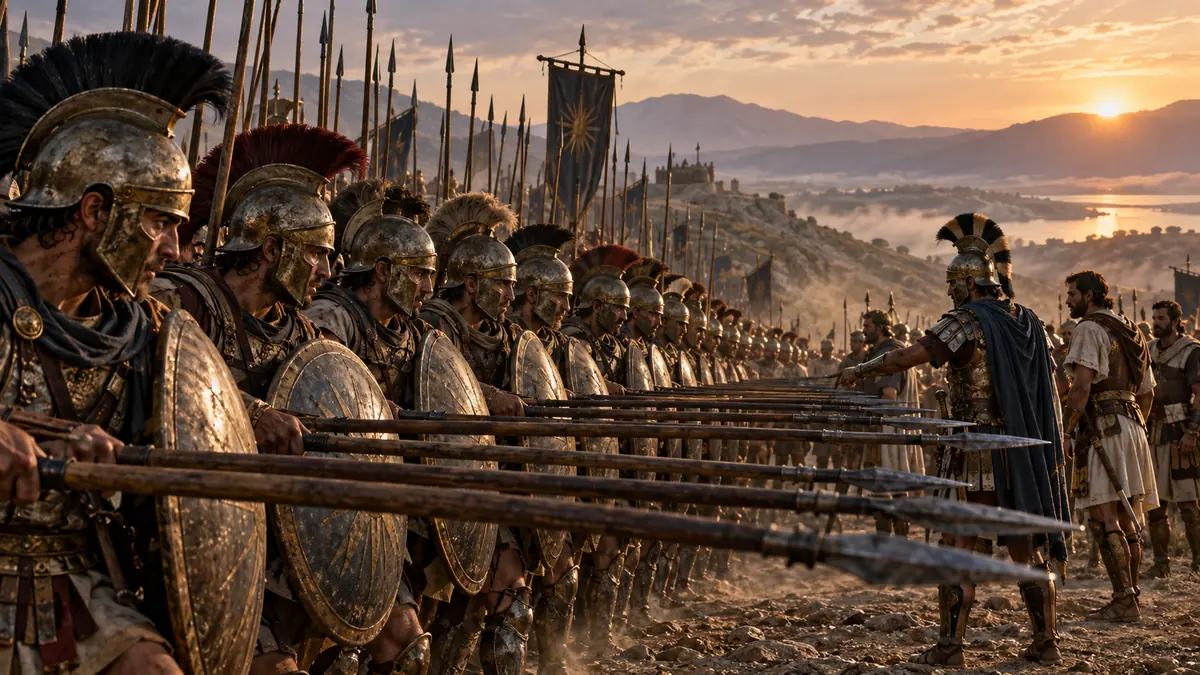
Military leaders throughout history had to decide with incomplete maps, delayed reports, unreliable estimates, and adversaries actively trying to deceive them. The most interesting lesson is not a particular tactic; it is the permanent gap between the decision-maker and reality.
Modern leaders face a different version of the same gap. Dashboards are not reality, forecasts are not facts, and executive summaries filter information. Good decision systems preserve multiple sources, challenge assumptions, and create feedback quickly enough to correct course.
Implementation playbook
For major choices, maintain a decision record. Write the decision, date, owner, assumptions, alternatives, expected outcome, downside, and review trigger. This creates institutional memory and makes later learning more honest because the original reasoning is not reconstructed after the outcome is known.
Use review triggers instead of constant reconsideration. A decision should be reopened because new evidence crosses a threshold, not because a stakeholder remains uncomfortable. This protects speed while preserving adaptability.
Questions worth asking
- What decision are we actually making?
- Which assumption carries the largest downside?
- Is the choice reversible?
- What option are we dismissing too quickly?
- What evidence would make us change course?
- Who owns the final call?
- What will we record so hindsight does not rewrite the process?
A practical operating checklist
- Write the decision as a single precise question.
- Separate facts, assumptions, and preferences.
- Classify how reversible the choice is.
- Create at least one serious alternative.
- Define plausible downside and critical dependencies.
- Invite structured dissent before commitment.
- Record the rationale and evidence that would trigger a review.
- Evaluate decision quality separately from the eventual outcome.
Frequently asked questions
What is decision making for leaders?
High-stakes decisions are rarely hard because leaders lack intelligence. They are hard because time, uncertainty, incentives, emotion, and consequence distort how the problem is framed.
Why does decision making for leaders matter?
It matters because leadership changes how people interpret priorities, make decisions, coordinate work, surface risk, and take responsibility under real constraints.
Can this capability be developed?
Yes. It develops through real responsibility, specific feedback, reflection, deliberate practice, and progressively harder situations rather than theory alone.
What is a common mistake?
A common mistake is focusing on leadership image or personality while ignoring the operating mechanisms—decision rights, standards, context, incentives, communication, and review—that shape behavior.
How should a leader start applying it?
Choose one live situation, define the behavior or decision that needs to improve, make the standard visible, practice it in real work, and review the evidence afterward.
Final idea
High-stakes judgment is not a gift that appears under pressure. It is the result of disciplined framing, explicit assumptions, useful dissent, proportional analysis, and a review process that teaches the organization how to decide better next time.