Luxury Brand Psychology: Why People Pay More for Status, Scarcity and Meaning
Luxury is not explained by “rich people like expensive things.” Different consumers use luxury differently: to signal visibly, to recognize insiders, to collect craftsmanship, to preserve identity, or to participate in a cultural story.
Luxury is a useful case study in human behavior because functional utility cannot fully explain premium pricing. A mechanical watch and a digital clock can both tell time; a leather bag can carry the same objects as a cheaper alternative. The difference lies partly in materials and craftsmanship, but also in scarcity, heritage, recognition, identity, social signaling, and the story surrounding the object.
Research on “brand prominence” shows that luxury signaling is not always loud. Some wealthy consumers prefer subtle products recognizable mainly to other insiders, while other consumers prefer conspicuous marks that broadcast brand identity more widely. That tension helps explain why both logo-heavy luxury and “quiet luxury” can coexist.

1. Luxury Converts Objects Into Social Signals
Products communicate before the owner speaks. A recognizable watch, car, hotel, bag, neighborhood, or club membership can signal wealth, taste, profession, group membership, or aspiration. The signal does not have to be consciously planned to affect how other people interpret the owner.
Status signaling is powerful because humans are social evaluators. We continuously infer competence, resources, alliances, taste, and rank from incomplete information.
2. Brand Prominence Changes Who Can Read the Signal
Han, Nunes, and Drèze introduced the idea of brand prominence: how conspicuous the brand mark is on a product. Their research argues that different consumer groups prefer different levels of visibility depending on wealth and need for status.
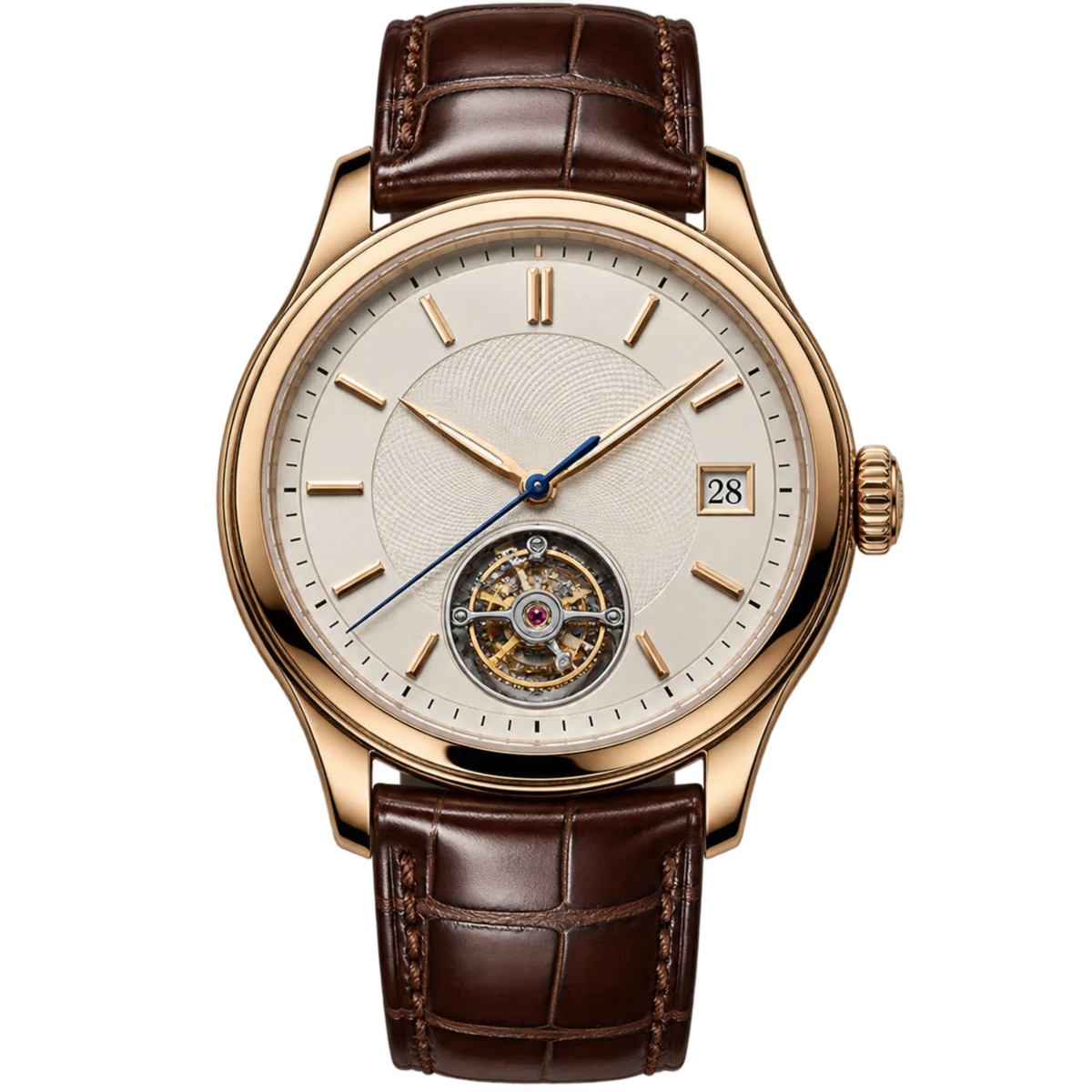
This helps explain the strategic value of subtle design codes. A product can be nearly invisible to outsiders yet highly legible to people who know the shape, stitching, movement, material, or model history.
3. Scarcity Raises Attention and Protects Distinction
Scarcity can increase perceived value because limited access preserves differentiation. If everyone can instantly obtain the same object, some of its signaling power may weaken. Luxury brands therefore manage production, distribution, waiting lists, editions, invitations, and assortment carefully.
But scarcity only supports long-term brand value when customers believe it is real. Artificial scarcity can create short-term urgency and long-term cynicism.
4. Heritage Reduces the Feeling of Arbitrary Price
A brand with decades or centuries of history can connect a current product to craftsmanship, historical clients, technical milestones, design continuity, or cultural moments. Heritage turns an object into a chapter of a longer story.
The strategic challenge is to keep heritage alive rather than museum-like. If the brand only repeats the past, younger buyers may admire the history without seeing relevance.
5. Craftsmanship Makes Invisible Labor Part of the Product
Hand finishing, material selection, specialized production, complex mechanical movements, tailoring, and small-batch processes make labor visible—or at least narratable. Part of the price buys time, expertise, reject rates, and process that mass production tries to remove.
Craftsmanship alone does not explain every luxury price. Brand equity and scarcity can multiply willingness to pay well beyond production cost. The useful distinction is between cost, functional value, symbolic value, and market power.
6. Luxury Can Be About Belonging and Distinction at the Same Time
A paradox sits at the center of luxury: people want recognition from the right group and differentiation from the broader group. The object must be familiar enough to communicate membership and distinctive enough to preserve status.
This is why subcultures of collectors develop detailed knowledge. An outsider sees “a watch.” An insider sees reference, movement, dial variation, production period, provenance, and rarity.
7. The Experience Extends Beyond the Product
Luxury retail often controls lighting, service, packaging, appointment structure, repair, delivery, events, and aftercare. Those details reduce the sense that the customer is purchasing a commodity. The relationship becomes ritualized.
The experience also protects price. When a premium product is sold through an ordinary, friction-filled, inconsistent process, the surrounding experience contradicts the positioning.
8. Resale Markets Change the Psychology of Ownership
A strong secondary market can reinforce the perception that certain objects are durable, collectible, and culturally significant. It also makes market prices visible, which can turn ownership into a financial narrative as well as a consumption narrative.
That does not make luxury products reliable investments. Transaction costs, fashion cycles, condition, authenticity, dealer spreads, and changing demand matter. Buying for identity or enjoyment and buying for expected return are different decisions.
What Luxury Brands Are Really Managing
- Recognition: who can identify the product?
- Access: how easy is it to acquire?
- Meaning: what story surrounds ownership?
- Craft: what expertise is visible or credible?
- Consistency: does the experience match the promise?
- Community: which groups adopt and interpret the object?
- Resale and longevity: does the product remain culturally legible over time?
The most resilient luxury brands manage a system of meaning, not merely a high price.
Price Itself Can Become Part of the Signal
In ordinary markets, a higher price is usually a disadvantage that must be justified by better value. In luxury, price can also support exclusivity by limiting access and reinforcing a perception of rarity. That does not mean customers prefer any product simply because it is expensive. The price works only when brand meaning, design, distribution, social recognition, and product credibility support it.
This creates a delicate strategic problem. Discount too frequently and the reference price weakens. Expand distribution too aggressively and exclusivity may erode. Restrict access too much and the brand can become culturally irrelevant. Luxury management is a balance between visibility and availability.
Quiet Luxury Is Still Signaling
Minimal logos do not eliminate signaling; they change the audience. A subtle cut, material, dial, silhouette, or construction detail can function as a code recognized by informed observers. The signal becomes narrower and can therefore feel more exclusive.
This is consistent with research on brand prominence: consumers differ in how much visible branding they want and in whom they want to recognize the signal. Loud and quiet luxury are not opposites so much as different communication strategies.
Why Luxury Brands Protect the Entire System
A luxury product surrounded by discount-store presentation, inconsistent service, uncontrolled distribution, and poor aftercare creates contradiction. Premium brands therefore manage retail architecture, sales training, packaging, repair, events, editorial storytelling, and resale relationships because every touchpoint influences perceived meaning.
The lesson extends beyond luxury. Positioning becomes stronger when product, price, channel, service, and communication agree. Luxury simply makes that strategic coherence unusually visible.
Practical Takeaways
- Luxury value combines functional, experiential, and symbolic layers.
- Status signaling can be conspicuous or deliberately subtle.
- Real scarcity can protect differentiation; fake scarcity can damage trust.
- Heritage and craftsmanship give the premium a narrative beyond materials.
- Luxury brands manage recognition, access, experience, community, and meaning as a system.
Frequently Asked Questions
Why do people buy luxury brands?
Reasons vary: craftsmanship, design, heritage, scarcity, collecting, identity, social signaling, belonging, distinction, and the experience of ownership can all matter.
What is quiet luxury?
It generally refers to premium products with subtle or low-prominence branding, where design, materials, and insider recognition matter more than large visible logos.
Does scarcity always make a product more valuable?
No. Scarcity can increase attention and desirability when the product already has perceived value and the constraint is credible. Scarcity alone cannot create durable brand equity.
Sources and Further Reading
- Han, Nunes & Drèze (2010) — Signaling Status with Luxury Goods: The Role of Brand Prominence
- APA Dictionary — Scarcity
Editorial note: Historical and conceptual visuals in this article are original editorial illustrations created for Millionaire Lesson. They are not presented as photographs of specific museum objects unless explicitly identified as such.