Roman Empire Timeline: From Augustus to the Fall of the West
A timeline is useful only when dates are connected to mechanisms. This guide follows imperial succession, military pressure, administrative reform, economic strain, and the changing relationship between Rome and its provinces.
The conventional beginning of the Roman Empire is 27 BCE, when Octavian received the title Augustus and established a political order that preserved republican language while concentrating extraordinary power in one ruler. The Western Roman Empire is conventionally said to end in 476 CE, when the last western emperor, Romulus Augustulus, was deposed. Neither date tells the whole story.
Roman imperial history includes long periods of stability, aggressive expansion, negotiated frontiers, civil wars, administrative reorganization, religious transformation, and the gradual rise of provincial elites. The eastern half of the empire continued for centuries after 476. The timeline below therefore treats “fall” as a western political transition, not the disappearance of Roman institutions overnight.

27 BCE–14 CE: Augustus Builds the Principate
After decades of civil war, Augustus created a durable settlement. He retained republican offices and the Senate while holding powers that made him the decisive figure in military and political life. The achievement was institutional as much as personal: future emperors inherited a model for ruling without formally declaring the old Republic abolished.
Augustan rule also reshaped Rome physically and symbolically. The Metropolitan Museum of Art notes extensive rebuilding, religious restoration, public works, and the use of art and literature to connect Augustus with stability, tradition, and imperial destiny.
14–68: The Julio-Claudian Dynasty
Tiberius, Caligula, Claudius, and Nero inherited a system whose rules of succession remained ambiguous. Claudius expanded Roman control, including the conquest of Britain beginning in 43 CE. Nero’s reign ended in revolt and suicide, revealing a structural weakness: imperial legitimacy ultimately depended on military and elite support as well as dynasty.
The dynasty’s collapse led to the Year of the Four Emperors in 69, when competing commanders demonstrated that emperors could be made far from Rome by armies with their own loyalties.
69–96: Flavian Reconstruction
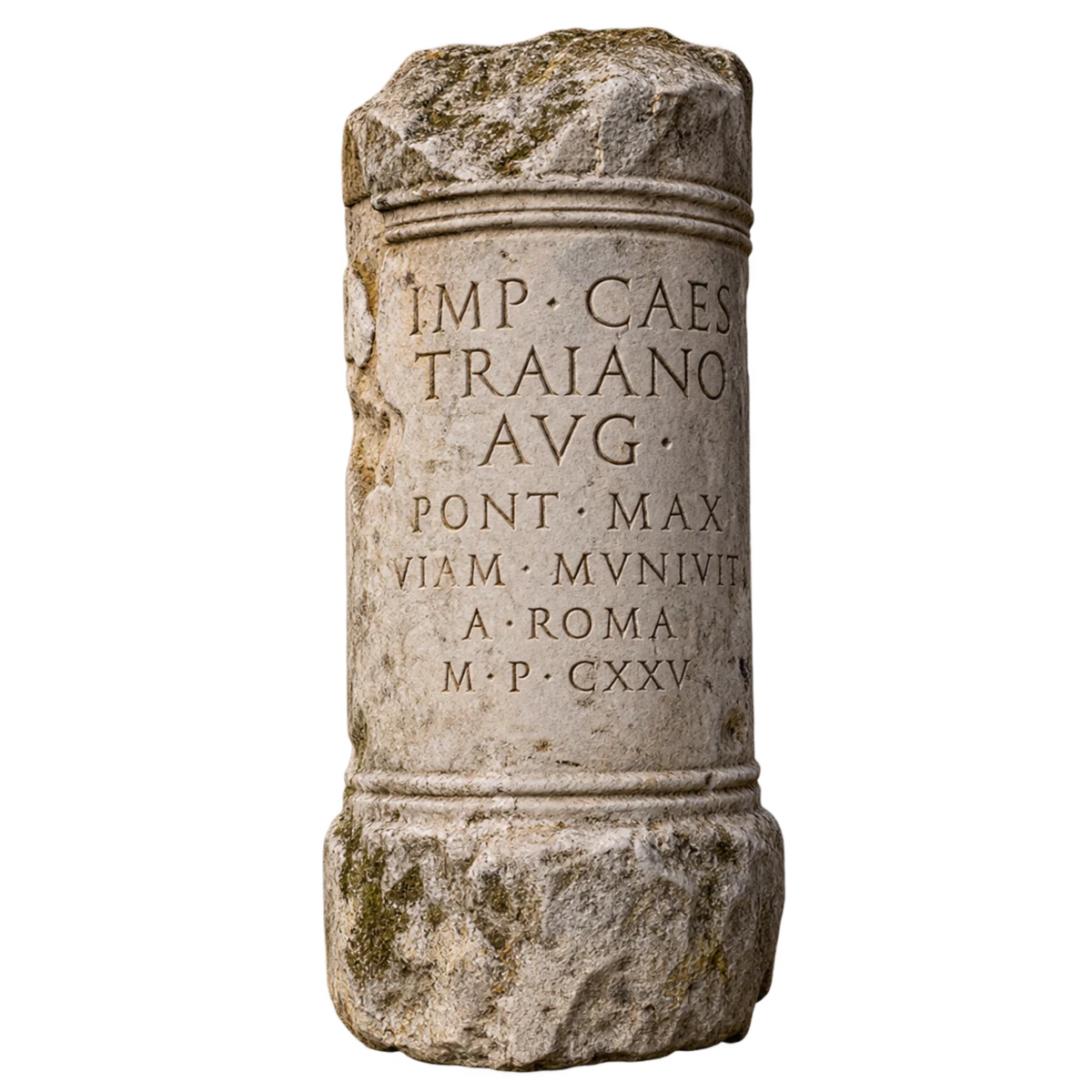
Vespasian emerged victorious from civil war and founded the Flavian dynasty. His rule focused on fiscal and political stabilization. Titus followed, and Domitian later expanded imperial administration while generating deep conflict with sections of the senatorial elite.
The Flavian period reminds us that Roman continuity repeatedly depended on rebuilding after internal conflict. Civil war was not an exceptional final symptom; it was a recurring feature of imperial politics.
96–180: Nerva, Trajan, Hadrian, Antoninus Pius, Marcus Aurelius
The era often labeled the “Five Good Emperors” included a succession of rulers adopted from outside a direct father-to-son line. Under Trajan, Roman territory reached its greatest extent after campaigns in Dacia and the East. Hadrian reversed some expansion and emphasized consolidation, travel, fortification, and administration.
The Met describes this period as one in which provincial participation in Roman political life increased. Under Marcus Aurelius, however, the empire faced major frontier warfare and the Antonine plague. Stability at the center did not mean the absence of severe external and internal pressure.
180–235: From Commodus to the Severans
Marcus Aurelius was succeeded by his son Commodus, returning succession to the dynastic principle. After Commodus was killed in 192, another civil war followed. Septimius Severus eventually prevailed, strengthening the role of the military in imperial politics and founding a new dynasty.
The Severan period brought capable rule and significant institutional change, but also rising military costs and increasingly unstable succession. The emperor’s relationship with the army became even more central.
235–284: The Crisis of the Third Century
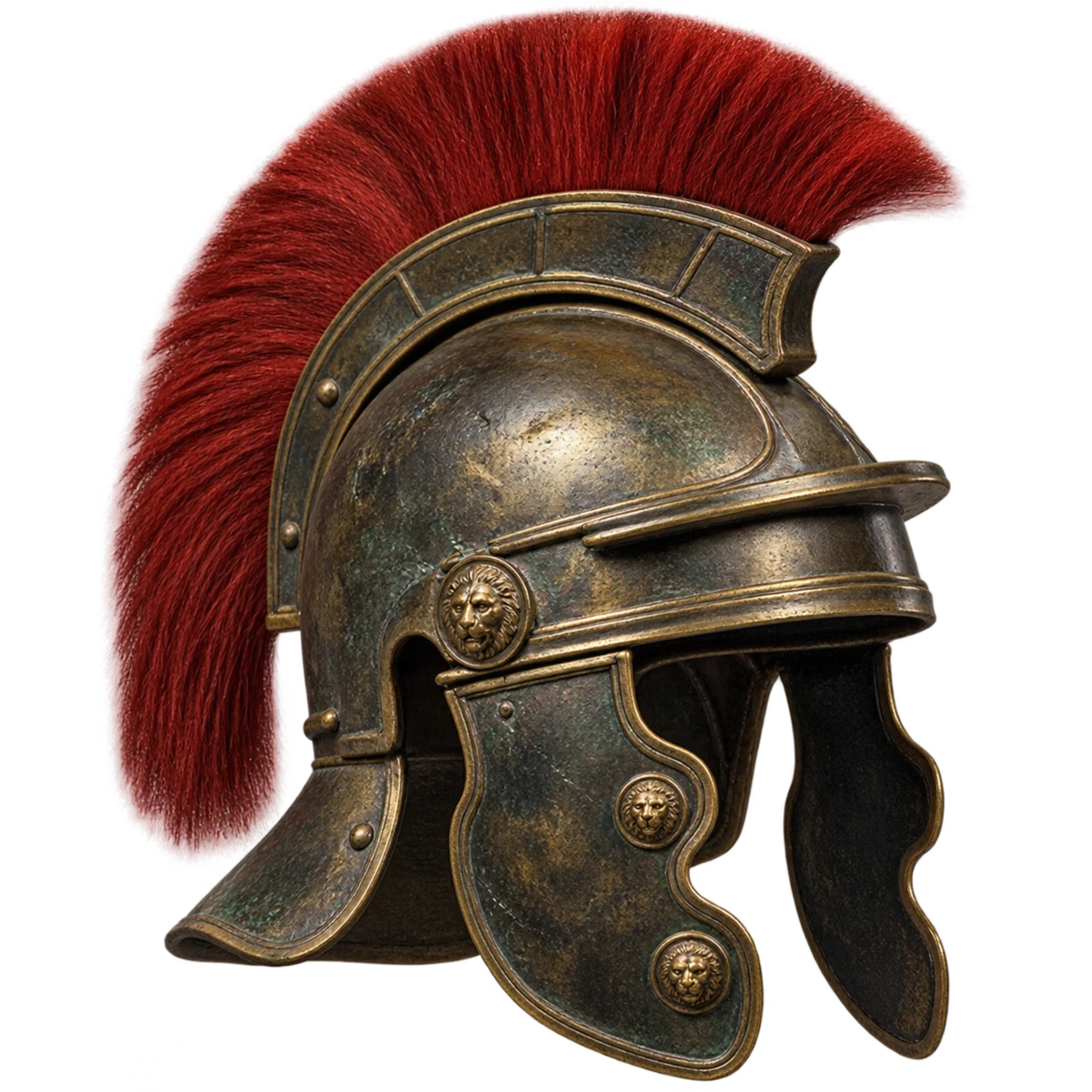
The empire experienced rapid imperial turnover, civil wars, invasions, separatist regimes, disease, and monetary disruption. Some emperors ruled for only short periods before being killed by rivals or their own troops. Yet the state did not simply collapse. Regional commanders, cities, armies, and administrators continued functioning under extreme stress.
Aurelian, emperor from 270 to 275, reunified breakaway territories and restored a degree of central control. The crisis is better understood as a period of institutional adaptation under pressure than as a straight line toward 476.
284–337: Diocletian and Constantine Transform the State
Diocletian introduced the Tetrarchy, dividing imperial responsibility among multiple rulers in an attempt to solve the problems of scale, frontier defense, and succession. Administrative divisions multiplied, taxation and military organization changed, and the ceremonial distance surrounding emperors increased.
Constantine emerged from subsequent civil wars as sole ruler. He founded Constantinople, supported Christianity, and reshaped the political geography of the empire. The center of gravity was becoming more eastern even while Roman identity remained imperial and Mediterranean.
337–395: Christian Empire and Intensifying Frontier Pressure
The fourth century saw repeated dynastic struggles, wars with Persia, conflicts along the Rhine and Danube, and major religious disputes within Christianity. In 378, Emperor Valens was killed at Adrianople fighting Goths, a dramatic reminder that large groups crossing or settling within imperial borders could become both military partners and threats.
Theodosius I was the last emperor to rule both eastern and western halves together. After his death in 395, his sons ruled separate courts. Administrative division was not entirely new, but from this point the political trajectories of East and West increasingly diverged.
395–476: The Western Empire Fragments
Western emperors struggled with shrinking revenues, military dependence on powerful generals, competition among court factions, and the settlement or conquest of territories by Vandals, Visigoths, Suebi, Burgundians, and others. Rome itself was sacked by Alaric’s Visigoths in 410 and by the Vandals in 455—events of enormous symbolic weight, though neither ended the empire immediately.
In 476, the Germanic commander Odoacer deposed Romulus Augustulus. The date is a convenient marker for the end of the western imperial office, but Roman law, Christianity, urban institutions, aristocratic networks, and eastern imperial power continued. The Eastern Roman Empire, centered on Constantinople, survived for nearly another thousand years.
Why the Western Empire Fell: No Single Cause
- Repeated civil wars consumed armies and political legitimacy.
- Frontier pressures increased while the West had fewer fiscal resources than the East.
- Military recruitment and command structures changed over time.
- Taxation, landholding, and regional power affected state capacity.
- Succession remained a recurring source of instability.
- Migration, settlement, alliance, and warfare with non-Roman groups reshaped the political map.
Historians debate the weight of these factors, and no responsible timeline should convert a centuries-long transformation into a single moral lesson. The most useful conclusion is institutional: Rome survived many crises because it could adapt, but adaptation had costs and did not produce the same resilience in every region.
What Held the Empire Together for So Long?
Rome’s durability cannot be explained by military force alone. Armies secured frontiers and suppressed rebellion, but imperial continuity also depended on taxation, roads, ports, urban government, law, local elites, citizenship, religious institutions, and the ability to incorporate provincial populations into Roman political life. The empire was a network of negotiated relationships as well as a command hierarchy.
Provincial elites could gain status through Roman institutions while continuing local traditions. Cities competed for prestige through public buildings and benefactions. Soldiers moved across frontiers and provinces. Trade connected regions with very different economies. This mixture of central authority and local adaptation helped the empire survive rulers who were personally weak or short-lived.
Why East and West Diverged
By late antiquity, the eastern empire possessed major urban centers, dense trade networks, and a fiscal base that often proved more resilient than the West. Constantinople also occupied a strategic position connecting Europe and Asia and was easier to defend than Rome. The western government faced repeated conflict among generals and emperors while losing effective control over revenue-producing territories.
That divergence matters because it shows why “Rome fell” is too broad a sentence. Western imperial government fragmented; eastern Roman government survived and evolved. Institutions, law, Christianity, language, and elite culture changed differently across regions. A timeline should therefore end with a political milestone while leaving room for continuity beyond it.
How to Read Imperial History Without Turning It Into Motivational Content
Roman history is full of tempting modern analogies: leadership lessons from Augustus, productivity lessons from Marcus Aurelius, strategy lessons from Trajan. Some comparisons can be illuminating, but the historical context comes first. Ancient slavery, hereditary status, military coercion, patronage, religious assumptions, and imperial violence made Roman institutions fundamentally different from a modern company or personal development program.
The responsible sequence is chronology, actors, institutions, mechanisms, conflict, uncertainty, consequences—and only then analogy. History becomes more useful, not less, when the differences are preserved.
Practical Takeaways
- 27 BCE is the conventional beginning of imperial rule under Augustus.
- Roman imperial power repeatedly survived civil wars through institutional adaptation.
- Trajan’s conquests marked the empire’s maximum territorial extent; Hadrian emphasized consolidation.
- The third-century crisis transformed the state rather than ending it.
- 476 CE marks the end of the western imperial office, not the immediate disappearance of Roman civilization.
Frequently Asked Questions
When did the Roman Empire begin?
27 BCE is the conventional date, when Octavian received the title Augustus and established the Principate.
When did the Roman Empire fall?
The Western Roman Empire is conventionally dated to 476 CE. The Eastern Roman Empire continued from Constantinople for centuries afterward.
Who were the Five Good Emperors?
Nerva, Trajan, Hadrian, Antoninus Pius, and Marcus Aurelius, ruling from 96 to 180 CE.
Sources and Further Reading
- The Metropolitan Museum of Art — The Roman Empire (27 B.C.–393 A.D.)
- The Metropolitan Museum of Art — Augustan Rule (27 B.C.–14 A.D.)
- The Metropolitan Museum of Art — The Julio-Claudian Dynasty (27 B.C.–68 A.D.)
Editorial note: Historical and conceptual visuals in this article are original editorial illustrations created for Millionaire Lesson. They are not presented as photographs of specific museum objects unless explicitly identified as such.