Why Classic Cars Become More Valuable: Scarcity, Design and Cultural Status
Age alone does not make a car valuable. Collector value emerges from scarcity, condition, originality, provenance, design significance and the changing tastes of buyers.
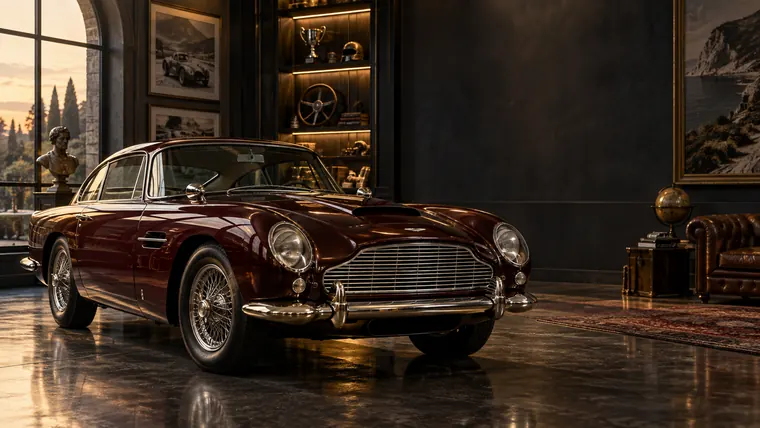
Classic-car markets are useful because they reveal how scarcity, story and authenticity create economic value. The engine matters. So does the design. But provenance, originality, documentation, condition and collector taste can move the number dramatically.
The result is a market that behaves more like art or antiques than like ordinary used transportation.
Scarcity is necessary, but not sufficient
A car can be rare because almost nobody wanted it. That does not make it valuable. Scarcity only creates pricing power when it meets demand.
Collector markets reward the intersection of limited supply and persistent desire. Production numbers matter, but so do survival rates, specifications and how many high-quality examples remain.
This is why two vehicles from the same model year can have radically different prices. A rare engine, body style, factory option or homologation variant can create a separate market inside the broader model.
Condition changes the asset, not just the price
Hagerty’s valuation methodology divides vehicles into condition categories because a concours-quality car is economically different from a tired driver. Restoration quality, mechanical health, paint, trim, interior and correctness all affect value.
Condition is not cosmetic bookkeeping. The cost of returning a car to a high standard can be enormous, and poor restoration can destroy originality that cannot be recreated.
Collectors therefore pay for avoided uncertainty as much as for shine.
Originality creates credibility
Original parts, correct finishes, numbers-matching components and documented factory specifications can command premiums because they preserve the object’s identity.
In ordinary consumption, modification can improve usefulness. In collecting, modification can weaken historical integrity. The market is not asking only, “Is this better?” It is asking, “Is this still the thing it claims to be?”
That is a different value system—and it explains why authenticity can be worth more than raw performance.
Provenance turns an object into a story
A car with significant ownership history, competition history, cultural association or complete documentation carries narrative value. Provenance reduces uncertainty about identity and adds a story that buyers can possess alongside the machine.
That does not mean every famous-owner claim is valuable. Documentation matters. The strongest provenance is verifiable and relevant to the car’s cultural meaning.
This is another parallel with art: ownership history can become part of the asset.
Design significance creates durable desire
Some cars become reference points for an era. Their proportions, engineering, motorsport history or role in popular culture make them recognizable decades later.
Design value is partly subjective, but cultural consensus can become surprisingly durable. A machine that represents the best of a period can remain desirable even after its performance has been eclipsed by ordinary modern cars.
Collectors are not buying transportation efficiency. They are buying a preserved encounter with a particular idea of engineering and beauty.
Documentation is an information premium
Service records, build sheets, invoices, ownership files and restoration photos reduce information asymmetry. The buyer can understand what happened to the car rather than pricing an unknown history.
This is a general investment lesson: uncertainty has a cost. Assets with clean, credible documentation are easier to underwrite.
In businesses, the equivalent is reliable financial records. In real estate, title and inspection. In collectibles, provenance and maintenance history.
Culture moves faster than metal
Collector demand changes with generations. Cars admired by one cohort may soften as that cohort ages; newer classics can rise as younger buyers gain purchasing power.
This means value is not purely intrinsic. It is partly social. The same object can become more desirable because taste, nostalgia and media attention change.
That makes classic cars fascinating but risky as investments. No vehicle is guaranteed to appreciate simply because it is old, expensive or beautiful.
The practical value checklist
If you are assessing a collector car, examine eight variables: rarity, condition, originality, provenance, documentation, specification, cultural desirability and maintenance burden.
Then separate purchase price from total ownership cost. Storage, insurance, restoration, transport, commissions and maintenance can materially reduce investment returns.
The disciplined collector buys the object first because it deserves ownership—and treats potential appreciation as a possibility, not a promise.
Collector value is a market, not a formula
Because condition and history vary so much, two cars with the same badge can behave like different assets. This is why professional valuation combines transaction data with expert interpretation rather than relying on model-year averages alone.
Liquidity also varies. A famous blue-chip model may have a deep international buyer pool, while an obscure rare car may require months to find the one buyer who cares.
That means asking price is not value. Value becomes visible when informed buyers are willing to transact.
Transaction costs make investment returns less glamorous
Collector-car headlines usually report purchase and sale prices. They rarely foreground transport, storage, insurance, maintenance, restoration, taxes, auction commissions and the time cost of ownership.
These frictions matter because alternative investments do not require a climate-controlled garage or a specialist mechanic. A car can appreciate in nominal price and still produce a mediocre net return.
The investment case should therefore be calculated after carrying costs, not from auction headlines.
The best collections have a thesis
A disciplined collector knows why a car belongs in the collection. The thesis might be one designer, one era, homologation cars, analog supercars, historically significant engineering or a particular marque.
A thesis creates coherence and improves knowledge. Over time, the collector becomes better at distinguishing ordinary examples from exceptional ones.
The same principle applies to any alternative asset: expertise creates an informational edge, while random acquisition turns passion into expensive clutter.
Restoration creates a difficult authenticity trade-off
A neglected car may need restoration to become usable or visually correct. But restoration can also replace original material that collectors value precisely because it survived.
This creates a spectrum rather than a simple rule. Preservation may be prized on a historically important car with exceptional originality. A high-quality restoration may be preferred when the original condition was already lost.
The economic lesson is that improvement and authenticity are not always aligned. Before changing a collectible asset, understand what the market values about its current state.
Why iconic specifications outperform ordinary ones
Within a model line, collectors often concentrate demand around the configuration that best represents the story: the right engine, gearbox, body style, competition version or launch-era specification.
That concentration can create a nonlinear price gap. The top specification is not merely ten percent more desirable; it may belong to a different collector category.
Understanding hierarchy inside the model is therefore essential. Buying “the same car” in the wrong configuration can produce a very different economic outcome.
Classic cars are cultural assets with mechanical obligations
A painting can hang quietly. A car contains fluids, seals, tires, batteries, fuel systems and thousands of components that age even when the vehicle is not driven.
That means preservation requires motion, maintenance and specialized knowledge. Mechanical neglect can erase part of the very value scarcity created.
The romance of ownership is real, but so is the operational burden. The best collectors treat maintenance as stewardship.
The deeper record behind the thesis
This section goes beyond the headline lesson and looks at the historical record, operating mechanisms, limits and trade-offs that make the subject useful rather than merely inspirational.
The collector-car market is fragmented by condition
Hagerty’s valuation framework uses separate condition categories because two examples of the same model can effectively belong to different markets. A concours-quality car and a usable driver do not merely differ by paint quality. They differ in restoration cost, originality, buyer pool and confidence.
This makes average prices dangerous. A headline sale may describe a best-in-world specification that has little relevance to an ordinary example.
Good valuation begins with category accuracy before price comparison.
Most transactions do not happen where headlines happen
Auctions receive enormous attention because prices are public and the theater is compelling. Hagerty estimates, however, that private-party transactions account for a large majority of collector-car sales, with auctions and dealers representing smaller shares.
This matters because the observable market is not the entire market. Public auction results are valuable reference points, but they can overrepresent rare, highly prepared or emotionally contested cars.
Investors in any illiquid asset should distinguish visible transactions from total market behavior.
Configuration can create a market inside a market
Collectors care about details that ordinary used-car buyers may treat as minor: engine, gearbox, coachwork, color, production sequence, factory options, competition specification and market of original delivery.
A desirable configuration can create a nonlinear premium because collectors are not buying generic transportation. They are buying the version that best expresses the model’s story.
That is why expertise matters so much. A novice sees two similar cars; a specialist may see two entirely different assets.
Originality versus restoration is not a simple contest
A perfect restoration can be beautiful while an unrestored survivor can be historically more important. Replacing old material may improve appearance and reliability while erasing evidence of originality.
The market’s preference depends on the car, its rarity, the quality of preservation and the collector community around it.
Before restoring a significant vehicle, owners should understand whether the market values perfection, preservation or correct period restoration most highly.
Provenance reduces uncertainty and creates narrative value
Ownership records, competition history, factory documents, invoices and period photographs help establish what a car is and what happened to it. Provenance can also attach cultural importance when a vehicle participated in a meaningful race, belonged to a notable person or appeared in a documented historical context.
The economic mechanism is partly informational and partly emotional. Documentation reduces risk; story increases meaning.
The strongest provenance does both.
Liquidity is the missing variable in many investment stories
A published valuation does not guarantee a buyer at that price. Collector vehicles can take time to sell, and the buyer pool may narrow sharply for unusual colors, modifications or obscure models.
Liquidity affects real return because sellers may accept discounts to exit quickly. Auction commissions, dealer margins, transport and preparation also create transaction friction.
An asset that appreciates slowly and sells expensively can underperform a more liquid investment even when the headline price rises.
Maintenance is not optional carrying cost
Cars deteriorate through both use and non-use. Fluids age, seals harden, tires expire, fuel systems degrade and mechanical systems need exercise and service.
Storage quality, insurance, specialist labor and parts availability should therefore be included in any economic analysis.
Collector-car ownership is a form of stewardship. Neglect can destroy the scarcity premium the owner believed he was preserving.
Taste is generational and therefore market risk
Collector demand is partly cultural memory. Buyers often pursue the cars they admired when young, once they reach the income or wealth to afford them. As generations change, the hierarchy of desirable models can change too.
This means rarity alone is insufficient. A rare object without a future community of enthusiasts may become less liquid and less valuable.
Status markets are social markets. The object matters; the audience matters too.
A disciplined pre-purchase checklist
Before buying, verify identity, specification, condition, originality, title, accident history, maintenance, provenance and documentation. Then compare real sold prices rather than only asking prices.
For expensive purchases, a specialist pre-purchase inspection can reveal structural, mechanical or authenticity problems that photographs hide.
The goal is not to remove emotion from collecting. It is to prevent emotion from doing the job of due diligence.
Why do some classic cars increase in value?
Because limited supply meets collector demand, with condition, originality, provenance, specification and documentation influencing the price.
Does age automatically make a car collectible?
No. Age alone does not create demand or cultural significance.
What does provenance mean for a classic car?
It is the documented history of ownership, competition, celebrity association or other events that help establish identity and significance.