Why Paintings Are Worth Millions: 6 Real Auction Stories
A masterpiece is not priced like a normal object. At the top of the art market, scarcity, provenance, cultural importance, institutional validation, collector psychology and competitive bidding can concentrate extraordinary amounts of wealth into a single canvas.

The short answer
Paintings can be worth millions because the supply of the most desired works is effectively fixed while demand can be global. A unique canvas by a canonical artist cannot be manufactured again, and when museums, scholars, dealers, collectors and auction houses converge around its importance, the object acquires a form of cultural scarcity that ordinary goods do not have. The price is then determined not by the cost of paint and canvas, but by what the next qualified buyer is willing to pay for ownership, status, historical proximity and the right to control a scarce cultural asset.
That does not mean art is automatically a good investment. It behaves differently from a stock, bond or income-producing property. It can be illiquid, expensive to transact, difficult to authenticate and vulnerable to changes in taste. A serious wealth framework therefore treats trophy art as a specialized asset that sits beside questions of wealth creation, wealth preservation and risk tolerance rather than as a shortcut to easy returns.
Six sales that reveal how the market really works
- Leonardo da Vinci, Salvator Mundi — sold at Christie’s in 2017 for $450,312,500, still one of the defining auction records in art-market history.
- Andy Warhol, Shot Sage Blue Marilyn — sold at Christie’s in 2022 for $195,040,000, setting a record for a 20th-century artwork at auction at the time.
- Pablo Picasso, Les femmes d’Alger (Version “O”) — sold at Christie’s in 2015 for $179,365,000 after decades in one of the most celebrated American private collections.
- Amedeo Modigliani, Nu couché — sold at Christie’s in 2015 for $170,405,000, nearly a century after Modigliani’s nude paintings helped trigger a police shutdown of his only solo exhibition.
- Jean-Michel Basquiat, Untitled (1982) — sold at Sotheby’s in 2017 for $110.5 million after having been purchased at auction for $19,000 in 1984.
- Gustav Klimt, Dame mit Fächer (Lady with a Fan) — sold at Sotheby’s London in 2023 for £85,305,800 after a roughly ten-minute bidding battle.
Why the numbers look irrational — until you understand scarcity
A mass-market object can usually be replaced. If one luxury watch disappears, another example of the same reference may eventually appear. If one house sells, another property can be built. But an important painting by a dead artist is a non-reproducible object in the economic sense that matters to collectors. Prints, photographs and digital copies can reproduce the image, but they do not reproduce the physical object with its history, surface, provenance and place in the artist’s career.
That distinction is the beginning of the price mechanism. The number of museum-quality works by a major artist is finite. A large share may already sit in museums and public collections, which removes them from the private market. The remainder may be locked in families or foundations for decades. When one exceptional example finally appears at auction, buyers who have waited years can be forced to compete in the same room on the same night.
The market therefore combines two forms of scarcity: physical scarcity and opportunity scarcity. The painting is unique, and the chance to acquire it may also be unique within a collector’s lifetime. That is why an auction can move from an estimate to a record in minutes. The bidders are not comparing hundreds of interchangeable units. They are deciding whether they may ever get another chance.

1. Leonardo da Vinci’s Salvator Mundi: from £45 to $450.3 million
Few art-market stories illustrate the power of attribution and rediscovery more dramatically than Salvator Mundi. Christie’s described the work as a painting by Leonardo da Vinci dating to around 1500. For much of the modern era, however, the picture did not occupy that position in the market. It had been obscured by overpainting, was long treated as a copy of a lost Leonardo composition and moved through the market at values that would later look almost impossible beside its 2017 result.
Christie’s records that the painting appeared at a Sotheby’s sale in 1958 and sold for £45. Decades later it resurfaced in the United States, where a purchaser acquired it in 2005 and a long process of restoration, technical examination and scholarly research followed. Christie’s later presented that process as one of the great rediscovery stories of the century. The work was included in the National Gallery’s 2011–12 Leonardo exhibition, an event that dramatically changed its public profile. Christie’s account of the rediscovery and 2017 sale describes the transformation from obscurity to global attention.
The 2017 sale was engineered as a global event. Christie’s toured the painting internationally, drawing tens of thousands of visitors before the auction. It was then placed not in a traditional Old Masters sale, but in a Post-War and Contemporary evening auction, surrounding a Renaissance picture with the audience and pricing psychology of the modern trophy market. The result was a 19-minute bidding contest and a final price of $450,312,500 including buyer’s premium.
What actually became more valuable?
The pigments had not changed in 2017. The wooden panel had not become more useful. What changed was the market’s accepted story about the object. Attribution, scholarship, exhibition history, rarity and publicity transformed the economic meaning of the same physical thing. That is why provenance and expert consensus are not administrative details in the high-end art market; they can function as value-producing infrastructure.
The lesson is broader than art. Markets often price not only cash flow, but confidence in identity. A rare coin becomes more valuable when its authenticity is established. A vintage car can jump in price when a competition history is documented. A historical manuscript can become extraordinary when its authorship is verified. In each case, information changes the object’s place in a hierarchy of scarcity.

2. Andy Warhol’s Shot Sage Blue Marilyn: the price of an icon
Andy Warhol’s Shot Sage Blue Marilyn, created in 1964, belongs to one of the most recognizable image families in postwar art. The source image was Marilyn Monroe, but the object’s value came from far more than celebrity. Warhol turned a mass-media face into a meditation on repetition, fame, death, commercial reproduction and the machinery of modern attention. The paradox is central to the price: he used the language of mass production to create individual objects that later became extraordinarily scarce.
The word “Shot” is literal. Christie’s recounts an episode at Warhol’s Factory in 1964 when performance artist Dorothy Podber asked whether she could “shoot” the Marilyn canvases. Warhol thought she meant photograph them. Podber instead produced a gun and fired through a group of canvases leaning against a wall. Four became known as the Shot Marilyns. The incident entered Warhol mythology and permanently attached a dramatic provenance story to the works. Christie’s lot essay for Shot Sage Blue Marilyn records the episode.
On 9 May 2022, Christie’s sold Shot Sage Blue Marilyn for $195,040,000. At the time, Christie’s described it as the most expensive 20th-century artwork ever sold at auction and the second-highest auction price for an artwork, behind Salvator Mundi. The number is useful not merely because it is large, but because it shows how the market rewards images that sit at the intersection of artistic importance, immediate recognizability and extreme scarcity.
Why recognizability matters
At the highest level, collectors are not always seeking obscure sophistication. Sometimes the most valuable object is the one that compresses an entire era into a single image. Warhol’s Marilyn does that. It can be understood instantly from across a room, yet it also belongs to a complex history of Pop Art, celebrity culture and mechanical reproduction. That combination creates what might be called cultural liquidity: even people who do not follow auctions know the face, the artist and the visual language.
Cultural liquidity should not be confused with financial liquidity. Selling a $195 million painting is still difficult, slow and expensive. But broad recognition can widen the pool of institutions, collectors and future buyers who understand why the object matters. In an illiquid market, shared recognition can make an individual masterpiece easier to position.

3. Picasso’s Les femmes d’Alger (Version “O”): provenance becomes an asset
Picasso painted fifteen versions of Les femmes d’Alger between December 1954 and February 1955, labeling them A through O. The series was based on Eugène Delacroix’s 19th-century painting of the same subject, and Christie’s notes that Picasso also conceived the project in relation to Henri Matisse, who had died shortly before the series began. Version O, completed on 14 February 1955, became the final and most fully resolved canvas in the sequence.
The provenance is as important as the chronology. Victor and Sally Ganz purchased the entire fifteen-painting series in 1956 for $212,500. They later sold ten works but retained several, including Version O. When the Ganz collection came to Christie’s in 1997, Version O sold for $31,902,500, more than twice its high estimate. Eighteen years later, in May 2015, the painting returned to Christie’s and sold for $179,365,000. Christie’s history of Version O and the Ganz provenance documents that chain.
Why a famous owner can strengthen a masterpiece
Provenance is often described simply as a list of previous owners. At the high end, it is better understood as a chain of credibility. A respected collection can reduce uncertainty, document continuity and create a historical narrative around the work. When an object has passed through a famous collection, major exhibitions and well-documented sales, each step can become part of the object’s identity.
The Ganz name mattered because the collection itself had become legendary for discipline, taste and long-term commitment. Buyers were not acquiring a random Picasso that happened to appear at auction. They were acquiring the culmination of a major series with one of the strongest private-collection histories in modern art.
This is a useful distinction for any collectible market. Condition matters, but context can matter almost as much. Two objects that appear similar at first glance may command radically different prices because one has a documented history, stronger rarity, superior condition, better publication history or a more important place in the maker’s career.
4. Modigliani’s Nu couché: scandal, rarity and the long arc of reputation
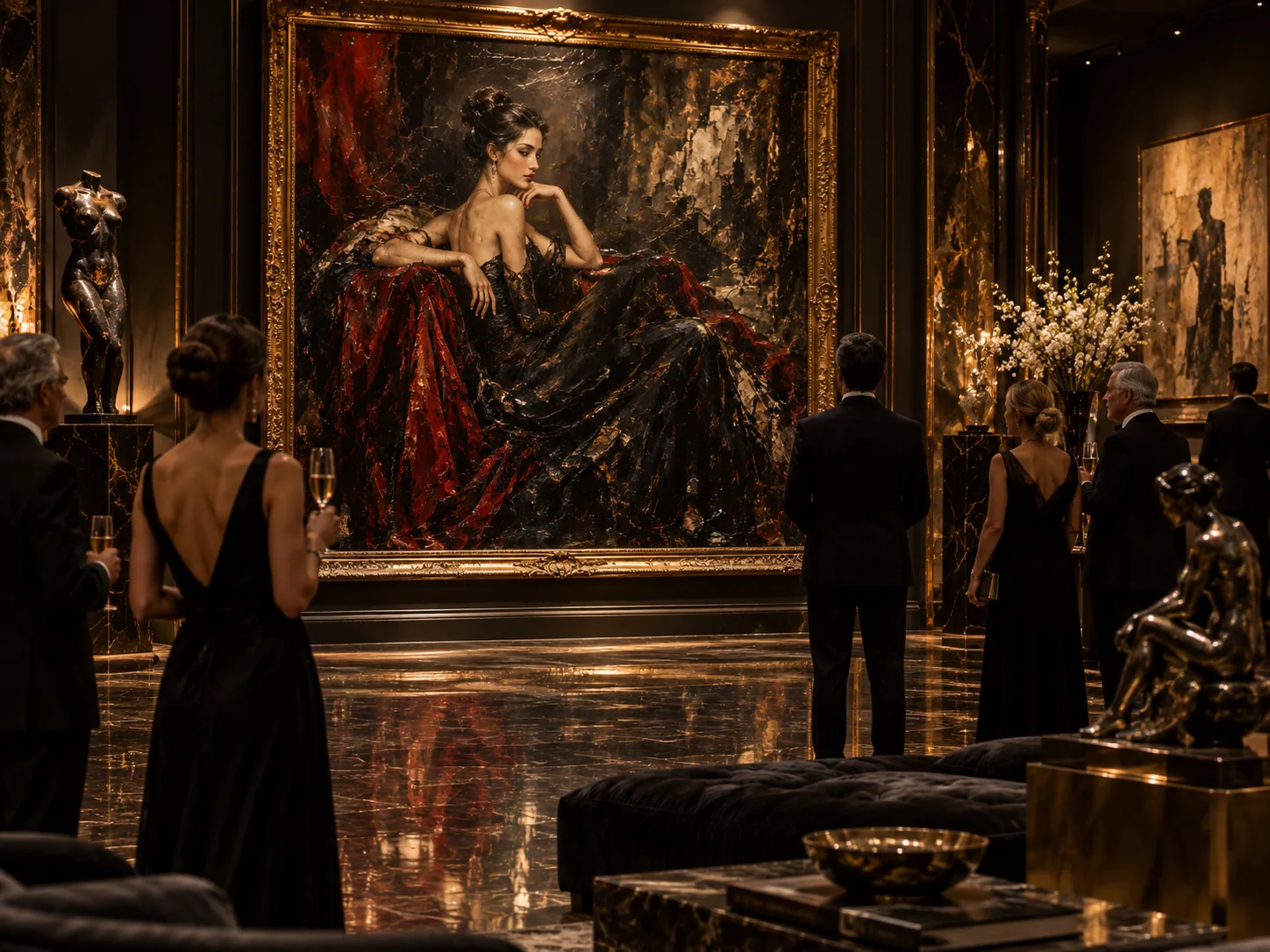
Amedeo Modigliani’s Nu couché, painted in 1917–18, belongs to a series of reclining nudes that became inseparable from the artist’s legend. When the works were shown at Galerie Berthe Weill in Paris during Modigliani’s first and only solo exhibition, the display caused enough public attention that police demanded the exhibition be closed. What began as provocation later became one of the most valuable bodies of figurative painting in the 20th-century market.
Christie’s sold Nu couché in New York on 9 November 2015 for $170,405,000 including buyer’s premium. Seven bidders competed for the painting on its first appearance at auction, and Christie’s later confirmed that the Long Museum had purchased it. Christie’s account of the Nu couché sale also notes that the result exceeded the artist’s previous auction record by nearly $100 million.
The market can reprice an artist across generations
Modigliani died in 1920 at the age of 35. He could not increase supply in response to rising demand. Over time, museum exhibitions, scholarship, dealer activity and collector competition progressively reclassified his best works from avant-garde controversy to canonical modernism. Once that process happens, a top painting is no longer compared with the average art market. It is compared with the best examples by Picasso, Matisse, Bacon, Klimt and other artists who occupy similar tiers of institutional and collector attention.
That is one reason record prices can appear discontinuous. The market is not always adding a few percent to last year’s price. Sometimes a work crosses into a different comparison set. A painting that had previously been evaluated as “important Modigliani” can become “one of the few remaining museum-level 20th-century masterpieces available to private buyers.” The buyer pool, expectations and price ceiling all change.

5. Basquiat’s Untitled: from $19,000 to $110.5 million
Jean-Michel Basquiat’s rise demonstrates how quickly a market can construct a canon. Untitled, painted in 1982, comes from the period most collectors associate with Basquiat’s explosive early maturity. Sotheby’s described the work as having been exhibited only in a small group show in 1982 before entering a private collection. In 1984, it was purchased at auction for $19,000 and then remained largely out of public view for decades.
When the painting returned to auction at Sotheby’s New York in May 2017, it sold for $110.5 million to Japanese entrepreneur Yusaku Maezawa. Sotheby’s reported the result as the highest auction price at that time for an American artist and for a work created after 1980. Sotheby’s pre-sale history of Basquiat’s Untitled records the 1984 purchase price, while Sotheby’s sale summary records the $110.5 million result.
How can the same painting move from $19,000 to $110.5 million?
The simple answer is that it was not operating in the same market in 2017 that it occupied in 1984. In the early 1980s Basquiat was a young artist whose long-term position was not settled. By 2017 his work had been absorbed into major museum collections, scholarship, global exhibitions and the broader story of postwar American art. Demand had expanded internationally while the supply of major 1982 paintings remained fixed.
This is the art-market version of a change in perceived quality rather than merely a change in price. The object stayed physically similar, but the collective judgment surrounding the artist changed. That is why contemporary art can produce spectacular returns and spectacular mistakes. If the future canon is uncertain, buyers are effectively underwriting a cultural forecast.
The financial analogy is imperfect but useful: early collectors accepted far more career risk. Later collectors paid a much higher price after much of that uncertainty had been resolved. The later buyer did not receive the early buyer’s entry price, but did receive a more established artist, stronger institutional validation and a deeper global market.
6. Klimt’s Lady with a Fan: when the last chapter becomes the asset
Gustav Klimt’s Dame mit Fächer (Lady with a Fan) has one of the most powerful forms of scarcity in art: it is tied directly to the final months of a major artist’s life. Sotheby’s states that the painting, executed in 1917–18, was still standing on an easel in Klimt’s studio when he died in February 1918. Unlike many of his famous society portraits, it was not a conventional commission; Sotheby’s describes it as a work in which Klimt was pursuing his own interests in pattern, color and beauty.
The painting had last appeared at auction in 1994, when it was acquired by the family that later consigned it in 2023. On 27 June 2023, after roughly ten minutes of bidding among four clients, it sold at Sotheby’s London for £85,305,800. Sotheby’s described the result as a new auction record for Klimt and a record for any artwork sold at auction in Europe at that time. Sotheby’s report on the 2023 Klimt sale records the result and the bidding contest.
Final works carry narrative scarcity
Collectors often pay a premium for works that occupy a decisive point in an artist’s story: first breakthroughs, final paintings, masterpieces from a peak year, works from a famous series, or objects connected to a major historical event. The reason is not purely sentimental. These positions make the work easier to locate within the artist’s biography and easier for museums, scholars and future buyers to explain.
A final major portrait by Klimt is not interchangeable with a competent work from a less important phase. Its place in the chronology becomes part of the asset. In markets built around connoisseurship, chronology can function almost like location in real estate: two objects may share the same artist, but one sits on a more valuable piece of historical ground.
What all six record sales have in common
The six stories are visually different and span more than four centuries of art, yet the price mechanisms repeatedly converge. The strongest works combine several forms of advantage at the same time.
- Extreme scarcity. The work is unique, and comparable masterpieces may be permanently held by museums.
- Canonical authorship. The artist occupies a durable place in art history rather than only a temporary market trend.
- Career importance. The object comes from a decisive series, peak year, final period or historically significant moment.
- Provenance. Ownership history, exhibition history and documentation reduce uncertainty and add narrative depth.
- Institutional validation. Museums, scholarship, catalogues and major exhibitions help establish why the work matters.
- Global recognizability. Iconic images can attract buyers far beyond a narrow circle of specialists.
- Competitive auction dynamics. A small number of wealthy bidders can push the marginal price sharply higher when the opportunity is rare.
- Story density. The best trophy works carry several stories at once: artist, era, owner, rediscovery, scandal, scarcity and record.
Notice what is missing from that list: production cost. The amount of canvas, paint and labor tells us almost nothing about the price. In a market for singular cultural assets, value is created primarily through perceived significance and constrained supply.

The auction room is a pricing machine
An auction is especially powerful for rare objects because it reveals the highest marginal willingness to pay in public and under time pressure. In a private negotiation, a buyer can wait, walk away and return later. In an auction, the object is disappearing in real time. Every bid forces a decision: pay more now or lose the opportunity, potentially forever.
That structure can amplify competition among wealthy buyers for whom the difference between $80 million and $90 million may matter less than the difference between owning and not owning the object. The winning price is not an average opinion of value. It is the point at which the second-most determined bidder stops and the winner remains.
This is why record sales should not be interpreted as clean appraisals of every similar work. A masterpiece sold during a carefully marketed evening sale, after a global exhibition tour, with several motivated bidders, can achieve a price that would be difficult to reproduce under different conditions. Art prices are path-dependent. Timing, venue, estimate, guarantees, press attention and the identity of competing bidders can all influence the outcome.

Why provenance can be worth millions by itself
Provenance performs three economic jobs. First, it supports authenticity by documenting where the object has been. Second, it reduces legal and title risk by clarifying ownership history. Third, it creates narrative prestige. A painting that belonged to a respected collector, appeared in a landmark exhibition or was reproduced in a major catalogue arrives at auction with accumulated evidence of importance.
For collectors, the absence of clean provenance can create the opposite effect. Gaps raise questions: Was the work stolen? Was it exported legally? Was it in a collection connected to wartime looting? Has the attribution changed? Has the painting been altered? The higher the price, the more expensive uncertainty becomes.
That is one reason sophisticated buyers pay for lawyers, conservators, provenance researchers, scientific analysis and specialist advice. The acquisition price may be the headline, but confidence in the object is part of what is being purchased.

Why art is not a normal investment
The record prices can make art look like a simple path to spectacular returns. That is misleading. The Basquiat that rose from $19,000 to $110.5 million is memorable precisely because it is exceptional. Thousands of other works from the same decades did not experience anything close to that outcome. Survivorship bias is enormous in collectible markets because the winners are photographed, published and auctioned again while the failures quietly disappear from attention.
A disciplined investor should separate the cultural argument from the portfolio argument. Art can diversify a household emotionally and aesthetically, but financial diversification requires attention to correlations, valuation uncertainty, liquidity and position size. A single trophy painting can become a concentrated exposure to one artist, one category and one set of collector preferences.
- No operating cash flow. A painting does not produce earnings, rent or dividends unless it is monetized through a separate business arrangement.
- High transaction costs. Auction commissions, dealer spreads, insurance, shipping, storage, taxes and advisory fees can be substantial.
- Illiquidity. Selling well may require the right season, auction house, estimate, marketing campaign and buyer pool.
- Valuation uncertainty. There is no continuous market price for a unique object.
- Authenticity and title risk. Attribution, provenance and legal ownership can materially affect value.
- Condition risk. Restoration, environmental damage and conservation history matter.
- Taste risk. Cultural attention can shift, especially for artists whose institutional status is less settled.
This is why art belongs in a broader conversation about wealth preservation rather than being treated as a replacement for liquid reserves, diversified securities or productive businesses. A collector may rationally accept lower liquidity because the object also provides enjoyment, identity, social status and legacy. But those benefits should be named rather than disguised as guaranteed investment return.

What wealthy collectors are really buying
At the top end, a painting can operate simultaneously as art, property, identity, access and social signal. Ownership may connect a collector to museums, foundations, curators, scholars and other collectors. Loans to exhibitions can increase visibility. Philanthropic relationships can deepen. A work can become part of a family legacy or a public institution after the owner’s death.
This does not reduce the object to status. The best collectors often care deeply about art itself. But economic analysis improves when we admit that utility is broader than financial return. A collector may derive value from living with the work, studying it, lending it, showing it privately, building a collection around it and eventually donating it. Those non-financial returns help explain why buyers accept transaction costs that would look irrational in a purely financial asset.
The concept is similar to other luxury assets, but more intense. A rare watch can signal taste and engineering knowledge. A historic car can provide access to rallies and concours events. A painting can connect the owner to centuries of cultural history while also functioning as a visible marker of wealth. The utility package is unusually dense.
A practical due-diligence framework for high-value art
If the goal is to think like a serious collector rather than chase headlines, the process matters more than the excitement of the room. Before committing major capital, a buyer should build an evidence file around the object.
- 1. Attribution: Who is the accepted artist, and what catalogue, foundation or scholarly authority supports that attribution?
- 2. Provenance: Is the chain of ownership documented, and are there unexplained gaps?
- 3. Title: Does the seller have clear legal ownership, and are there restitution, export or inheritance issues?
- 4. Condition: What does the conservation report show about restoration, overpainting, structural damage or material instability?
- 5. Exhibition and literature: Has the work appeared in major museum shows, catalogues raisonnés or serious scholarship?
- 6. Market comparables: What truly comparable works have sold, and how do size, date, subject, quality and provenance differ?
- 7. Exit market: Which institutions, dealers and collectors would plausibly compete for the work in the future?
- 8. Portfolio impact: How much of total net worth would be concentrated in an illiquid object, and can the owner comfortably hold it through a weak market?
The last question connects art collecting to ordinary capital discipline. An investor who understands risk tolerance knows that the ability to hold through uncertainty matters as much as the theoretical upside. Forced selling is dangerous in any illiquid market because the owner loses control over timing.
The deeper wealth lesson: information can transform scarcity
The most useful insight from these auctions is not that everyone should buy paintings. It is that wealth often gathers around scarce assets whose quality becomes more legible over time. A forgotten work can be cheap because the market does not yet understand it. A canonical work can be expensive because thousands of hours of scholarship, exhibition history and collector competition have already reduced uncertainty about its importance.
That relationship appears in many domains. A small company can become valuable when its economics are proven. Land can be repriced when infrastructure changes its future use. A rare historical object can be repriced when provenance is established. Skill can become more valuable when a market discovers that it is scarce. Price changes when information changes what people believe they are looking at.
But the lesson has a second side: stories can also become bubbles. If buyers confuse publicity with durable importance, scarcity with quality or a rising price with permanent value, the same feedback loop can work in reverse. The correct response is not cynicism. It is evidence. Ask what is actually scarce, what is independently validated, what would remain important without the current hype and who would still want the asset if the market became quiet for five years.
How to think about art inside a serious wealth strategy
For a wealthy household, art can make sense when the purchase fits the owner’s finances rather than forcing the finances to fit the purchase. That usually means the collector already has adequate liquidity, diversified productive assets, insurance and a long time horizon. The painting is then a deliberate concentration in culture, taste and legacy rather than a desperate search for return.
The same logic applies to any non-traditional asset. Build the financial base first, then decide how much capital can be devoted to specialized holdings. Compounding wealth usually depends on owning productive assets for long periods, while art generally depends on scarcity and future buyer demand. Those are different engines of value and should not be confused.
A collector who understands that distinction can enjoy the upside without needing to invent one. The painting can be beautiful, historically important, socially meaningful and financially valuable at the same time. It does not need to behave like an index fund to justify its place in a wealthy person’s life.
For readers building wealth from a more ordinary starting point, the practical sequence remains more conventional: create surplus cash flow, protect liquidity, own productive assets and avoid catastrophic concentration. The framework in Wealth Building on an Average Income is far more relevant to most households than record-breaking art. The auction stories become useful when they teach how scarcity, reputation, provenance and competition can reshape value.
Frequently Asked Questions
Why can a painting be worth hundreds of millions of dollars?
Because a top painting is a unique cultural object with fixed supply. When the artist is historically important, the work is museum quality, provenance is strong and several wealthy buyers compete at once, the market can concentrate enormous value into a single canvas.
What is the most expensive painting ever sold at auction?
Christie’s sold Leonardo da Vinci’s Salvator Mundi for $450,312,500 in New York on 15 November 2017. Christie’s described the result as the world auction record for any work of art at the time.
Does an auction record mean the painting is a good investment?
No. A record proves that at least two bidders supported an unusually high price at a particular moment. It does not guarantee future appreciation, liquidity or a profitable resale after transaction costs.
Why is provenance so important in expensive art?
Provenance helps establish authenticity, legal title and historical significance. A strong chain of ownership can reduce uncertainty and make the object easier for scholars, museums and future buyers to trust.
Can art diversify a portfolio?
Potentially, but diversification benefits depend on the object, purchase price, holding period and the rest of the owner’s assets. Art is illiquid and difficult to value, so position size and the ability to hold for many years matter.
Why do collectors pay more for works from certain years or series?
Because not every year in an artist’s career has equal historical importance. Peak periods, breakthrough series, final works and paintings connected to major exhibitions often have stronger scholarship, museum demand and collector recognition.
Sources and Further Reading
- Christie’s — Leonardo’s Salvator Mundi makes auction history
- Christie’s — Shot Sage Blue Marilyn and the 2022 sale result
- Christie’s — Les femmes d’Alger (Version “O”) 2015 results
- Christie’s — Modigliani’s Nu couché sale
- Sotheby’s — Basquiat’s Untitled 1982
- Sotheby’s — Klimt’s Lady with a Fan auction record