Doge Andrea Gritti by Titian: How Portraiture Turns Political Power Into Image
Titian’s monumental portrait of Andrea Gritti shows how clothing, gesture, paint, patronage, and provenance can turn political authority into a durable visual identity.
Titian’s portrait of Doge Andrea Gritti is not a quiet image. The sitter fills the canvas with mass, cloth, gold, gesture, and force. His face appears weathered and severe. His robe is heavy. His body seems too large for the space. Everything about the picture tells the viewer that authority is not being requested—it is being imposed.
The National Gallery of Art describes the work as one of Titian’s finest portraits and emphasizes the “awe-inspiring authority” created by Gritti’s expression and imposing figure. That makes the painting especially useful for understanding the relationship between portraiture and political power. It is not simply a likeness of a man who once governed Venice. It is an argument about how power should look.
1. Andrea Gritti came to power through trade, diplomacy, war, and politics
Gritti’s career was unusually varied. The National Gallery of Art notes that he spent years in Constantinople, where he was active as a grain merchant and a spy, later helped negotiate peace with the Turks, served as commissioner of the Venetian army, and was elected doge in 1523. His authority therefore rested on more than inherited prestige. It had been built across commerce, diplomacy, military administration, and political maneuvering.
This background helps explain the portrait’s intensity. Gritti is not presented as a decorative court figure. He looks like a man whose legitimacy depends on action. Titian turns physical presence into political evidence.
2. Venice used art as political infrastructure
Gritti’s patronage matters as much as his biography. Scholarly material from the National Gallery of Art describes his use of art and architecture as a powerful instrument of political ideology. After the damage and humiliation of the War of the League of Cambrai, he supported a program of urban and cultural renewal that helped Venice present itself as resilient, ordered, and comparable to a “New Rome.”
That phrase is revealing. Political power does not exist only in laws and armies. It also exists in buildings, ceremonies, images, and public memory. When a government rebuilds a square, commissions monumental architecture, or controls the visual language of office, it is shaping how citizens and foreigners experience authority.
3. Why the robe matters
Gritti’s enormous robe is central to the portrait. It is gold-toned, patterned, heavy, and edged with details that communicate rank. The NGA’s description emphasizes its brocade appearance, large gold buttons, and the way Titian uses highlights to communicate sheen. The material becomes almost architectural.
This is status clothing in the strongest sense. The garment is not merely beautiful. It changes the apparent scale of the body. Gritti becomes wider, heavier, and harder to ignore. Clothes here perform the same job as monumental architecture: they enlarge the subject’s social presence.
4. The face refuses idealized politeness
Titian does not smooth Gritti into youthful perfection. The face is forceful, aged, and textured. Thick paint emphasizes its structure. That choice gives the portrait psychological weight. The sitter’s authority appears earned, perhaps even dangerous.
In elite portraiture, there is always a balance between beauty and credibility. Too much idealization can weaken the sense of real power. Gritti’s portrait moves in the opposite direction. It makes severity itself prestigious. The message is not “admire my attractiveness” but “recognize my capacity.”
5. The gesture may connect Gritti to a larger language of rulers
The NGA notes that Gritti’s forceful hand gesture may echo Michelangelo’s Moses, which could have invited comparison with Pope Julius II. Whether every viewer recognized the reference or not, the broader strategy is familiar: rulers borrow established symbols of authority to make their own image more powerful.
This is exactly how status traditions reproduce themselves. A new leader does not invent an entirely new language. He inherits poses, materials, architectural styles, titles, symbols, and rituals that previous elites have already taught audiences to respect. Prestige works partly because it is cumulative.
6. The portrait outlived the man and entered other elite collections
The painting’s provenance is almost a second political history. The NGA records that it was purchased in Italy in 1626 for King Charles I of England and later moved through aristocratic and collecting networks before entering the Kress Collection and then the National Gallery of Art. That trajectory matters because it shows how portraits of power can become prestige objects for later owners who have no direct connection to the original sitter.
A collector who acquires such a work acquires more than canvas and paint. He acquires association—with Titian, Venice, a doge, a royal collection, and centuries of connoisseurship. Provenance turns past status into portable cultural capital.
7. Gritti’s lesson for modern personal branding
Modern personal branding often focuses on visibility, but Gritti’s portrait suggests a deeper principle: the strongest image is coherent with the person’s actual role. The painting amplifies traits that made sense for a military commissioner, diplomat, merchant, and doge—weight, control, severity, material authority.
A weak brand decorates. A strong brand selects signals that fit the underlying position. This is why the portrait still works. It does not feel like a costume placed over an empty identity. The costume, gesture, face, and historical role reinforce one another.
Powerful imagery is persuasive when the symbols do not merely flatter the subject but make the subject’s role legible.
Continue exploring
Roman Empire Emperors: Who Ruled Rome and What Their Leadership Reveals About PowerStatus Symbols: Why Humans Use Objects to Signal Identity, Rank and BelongingGold Frames in Art History: Why Gilding Became the Language of Wealth and Prestige
8. The “New Rome” idea made classical imagery politically useful
Renaissance Venice had its own identity, institutions, saints, myths, and civic traditions, yet classical Rome remained a powerful reference for political grandeur. Gritti’s cultural program used architecture and art to present Venice as renewed, stable, and historically significant after military crisis.
This is a recurring pattern in political imagery. Leaders borrow authority from older civilizations because the past offers ready-made symbols of endurance. Columns, monumental scale, classical forms, heroic gestures, and historical comparisons allow a contemporary government to position itself inside a longer story.
9. Titian turns paint into physical authority
The portrait is especially effective because Titian’s technique supports the political message. Thick paint gives the face weight. Highlights animate the robe. Broad handling prevents the surface from becoming fragile or overly polished. The picture feels bodily rather than porcelain-smooth.
That material force is part of the psychology. A highly finished but delicate image might communicate elegance. Gritti’s portrait communicates mass. Even the paint seems to participate in the sitter’s dominance.
10. Private portrait, public language
The NGA notes that the Washington portrait probably was not conceived as the standard official image for a public building. Its composition differs from more conventional state portraits and may have been privately commissioned. Yet private does not mean apolitical.
A private portrait can still use the symbols of office, dynasty, and state. It may circulate among family members, visitors, collectors, or later rulers. In this case, the painting’s authority was strong enough to remain legible far outside its original Venetian context.
11. Provenance added new layers of prestige
Its later ownership by Charles I of England is especially revealing. Royal collections often convert already-important works into objects with a second pedigree. The painting becomes significant because of Titian and Gritti, then significant again because of the history of collecting that follows.
This accumulated pedigree is one reason provenance matters so much in elite art markets and museums. Ownership can become historical evidence. It can also affect how later audiences understand an object’s prestige.
12. The portrait is a case study in controlled intimidation
Gritti’s image is not friendly. That is precisely why it works. Political authority often benefits from a calibrated distance between ruler and viewer. Too much warmth can reduce majesty; too much coldness can create alienation. Titian finds a point where force and intelligence appear together.
The face, gesture, garment, and scale create a coherent emotional instruction: take this person seriously. That is not an incidental reaction. It is the portrait’s central achievement.
13. From Renaissance doge to modern executive portrait
The techniques have changed, but modern leaders still manage visual authority through clothing, camera angle, architecture, gesture, lighting, and controlled environments. Corporate portraits often use offices, city views, books, or minimal luxury materials to make the sitter’s role visible without stating it directly.
Gritti’s portrait reminds us that these choices are ancient. Personal branding did not begin with social media. It began whenever powerful people realized that an image could travel farther and last longer than the body itself.
14. What to notice in the portrait
- The way the robe increases the sitter’s apparent width and mass.
- The contrast between the weathered face and sumptuous clothing.
- The hand gripping the robe, which gives the body tension rather than passive elegance.
- The limited background, which prevents the environment from competing with the sitter.
- The use of gold and sheen to make office materially visible.
- The possibility that the gesture recalls Michelangelo’s Moses and therefore links Gritti to other models of forceful rulership.
Frequently asked questions
Who was Andrea Gritti?
He was a Venetian merchant, diplomat, military commissioner, and doge, elected in 1523. He also played an important role as a patron of art and architecture.
When did Titian paint the portrait?
The National Gallery of Art dates it to about 1546–1550, after Gritti’s death in 1538, though the exact dating and circumstances have been debated.
Why is the portrait considered powerful?
Its scale, severe expression, forceful gesture, massive robe, and Titian’s energetic paint handling create a strong sense of authority.
What does the painting teach about political branding?
That power becomes persuasive when symbols, materials, pose, and the sitter’s real institutional role reinforce one another.
15. Why powerful portraits often minimize the background
Gritti’s portrait does not need an elaborate palace interior to establish rank. The relatively restrained background concentrates attention on the face, robe, and gesture. This is a useful contrast with status portraits that rely heavily on possessions. Here, the sitter himself is the primary monument.
That choice suggests a hierarchy of signals. Props are useful when they add evidence, but too many can weaken authority by making the viewer study the environment instead of the person. Titian’s solution is concentration: the richest material in the picture is attached directly to the body, so office and person become visually inseparable.
16. Authority is partly a problem of memory
Every political office faces the same problem: the office continues, but individual officeholders disappear. Portraits help institutions manage that transition by creating a visual archive of leadership. They preserve not only faces but also the conventions by which power was represented in a particular age.
Seen this way, Gritti’s portrait is both personal and institutional. It preserves one unusually forceful man while also contributing to a longer Venetian tradition of making the doge visible as the embodiment of the republic. That double role is one reason political portraiture is such a rich source for understanding leadership culture.
Sources and further reading
- National Gallery of Art — Doge Andrea Gritti by Titian
- National Gallery of Art — Scholarly catalogue entry on Doge Andrea Gritti
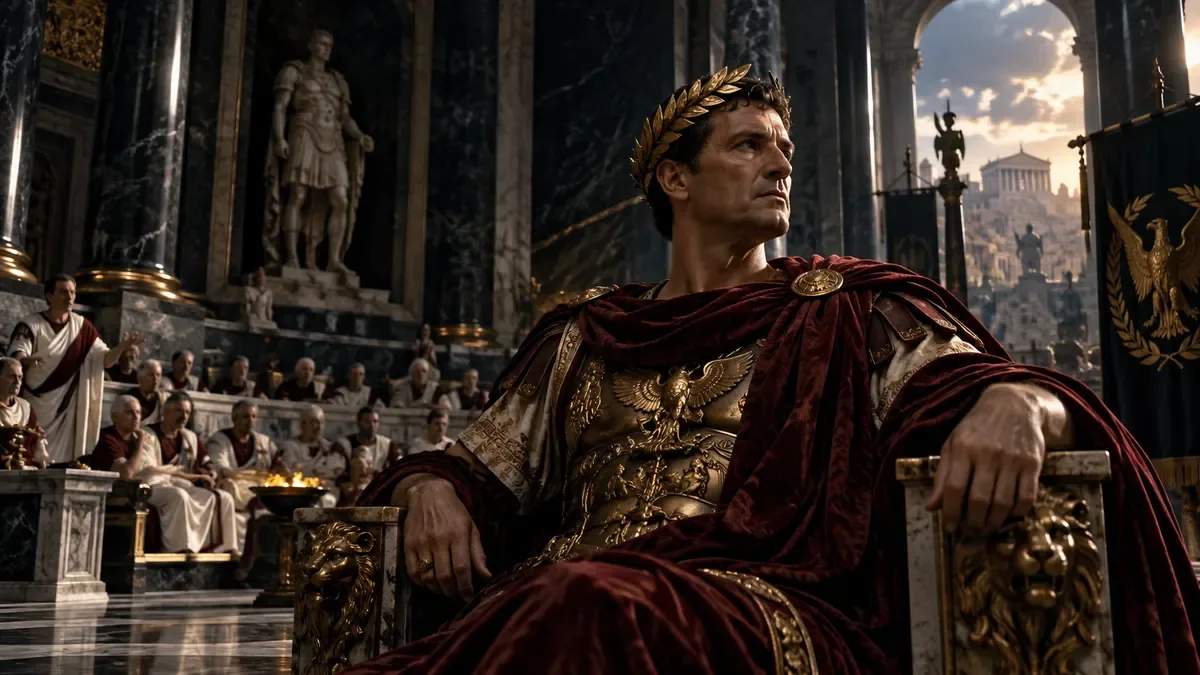
The editorial images on this page were created for Millionaire Lesson and are not reproductions of the historical works discussed.